
 Mirror
A teak dining set costs $3,000 to $10,000. A comparable aluminum-and-wicker set costs $800 to $2,000.
A teak dining set costs $3,000 to $10,000. A comparable aluminum-and-wicker set costs $800 to $2,000. On the surface, the math seems obvious — why spend four to five times more on outdoor furniture? Because teak furniture is one of the few purchases where spending more actually costs you less per year.
That’s not marketing — it’s arithmetic. When you divide the purchase price by the number of years a piece performs at full quality, teak consistently undercuts its cheaper competitors. This article runs the real numbers on whether teak furniture is worth the investment, compares it against the three most common alternatives, and explains exactly why a wood that grows 8,000 miles away commands the prices it does.
Why Teak Costs What It Does
Teak (Tectona grandis) is one of the few hardwoods that produces its own protective oils. These natural oils — along with a tight grain structure and high silica content — give teak three properties that no other commonly available wood matches simultaneously:
- Water resistance — teak doesn’t absorb moisture readily, which prevents the swelling, warping, and cracking that destroy most outdoor wood furniture within a few years
- Insect resistance — the natural oils repel termites, marine borers, and other wood-eating organisms without chemical treatment
- Dimensional stability — teak shrinks and expands less than virtually any other hardwood when humidity changes, which means joints stay tight for decades
These properties don’t come from any treatment or coating — they’re inherent to the wood itself. This is why Grade-A teak (cut from the dense, oil-rich heartwood of mature trees) commands a premium over Grade-B or Grade-C teak, which comes from younger trees or the less dense sapwood.
Pro tip: Always ask whether a teak product uses Grade-A heartwood. Lower-grade teak can look identical when new but lacks the oil density that drives teak’s legendary durability. Reputable manufacturers like Anderson Teak specify their grade prominently.
The Cost-Per-Year Analysis
Here’s where the investment argument becomes concrete. We compared four common outdoor furniture materials across their realistic lifespans, including maintenance costs and replacement cycles.
| Material | Typical Set Price | Realistic Lifespan | Maintenance Cost/Year | Total 30-Year Cost | Cost Per Year |
|---|---|---|---|---|---|
| Grade-A Teak | $3,800 | 30–50 years | $0–$30 (optional oiling) | $3,800–$4,700 | $127–$157 |
| Aluminum + Wicker | $1,200 | 5–8 years | $20/yr (cushion replacement) | $5,400–$7,800 | $180–$260 |
| Treated Softwood (Pine/Cedar) | $600 | 3–6 years | $50/yr (staining/sealing) | $4,500–$7,500 | $150–$250 |
| Wrought Iron | $2,000 | 15–20 years | $40/yr (rust prevention) | $4,600–$5,200 | $153–$173 |
Over a 30-year period, Grade-A teak is the least expensive option per year of use — and that’s without factoring in the inconvenience of shopping for, ordering, and assembling replacement furniture every 5-8 years. A set like the Anderson Teak Bahama Chicago 5-Piece Dining Set at $3,860 will still be hosting dinner parties long after its third aluminum-and-wicker replacement has been hauled to the curb.
What 30 Years of Teak Actually Looks Like
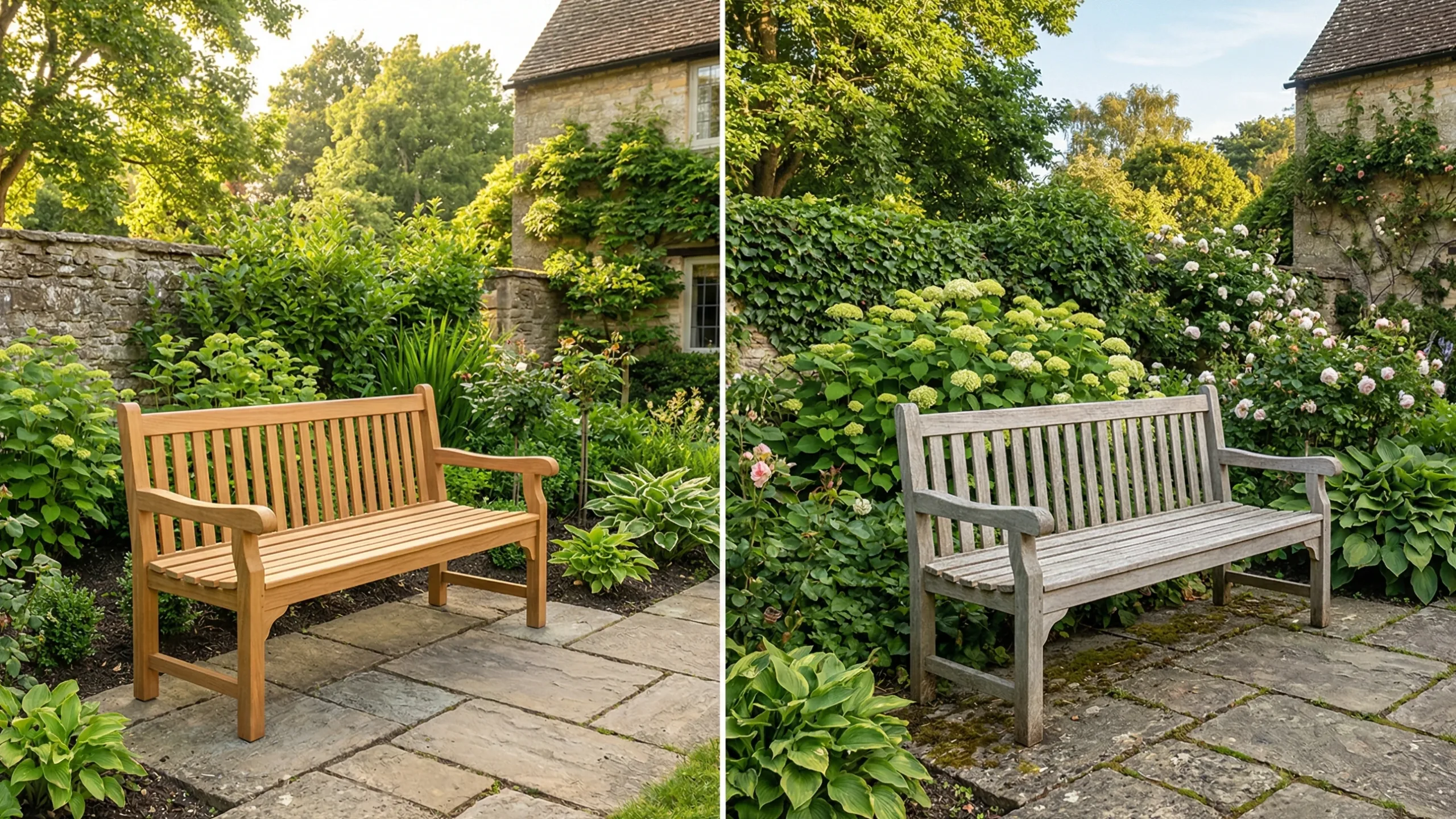
One concern buyers have is aging. Will a $4,000 set still look good in year 15? The answer depends on your aesthetic preference — and either way, the answer is yes.
The Silver Patina Path (Zero Maintenance)
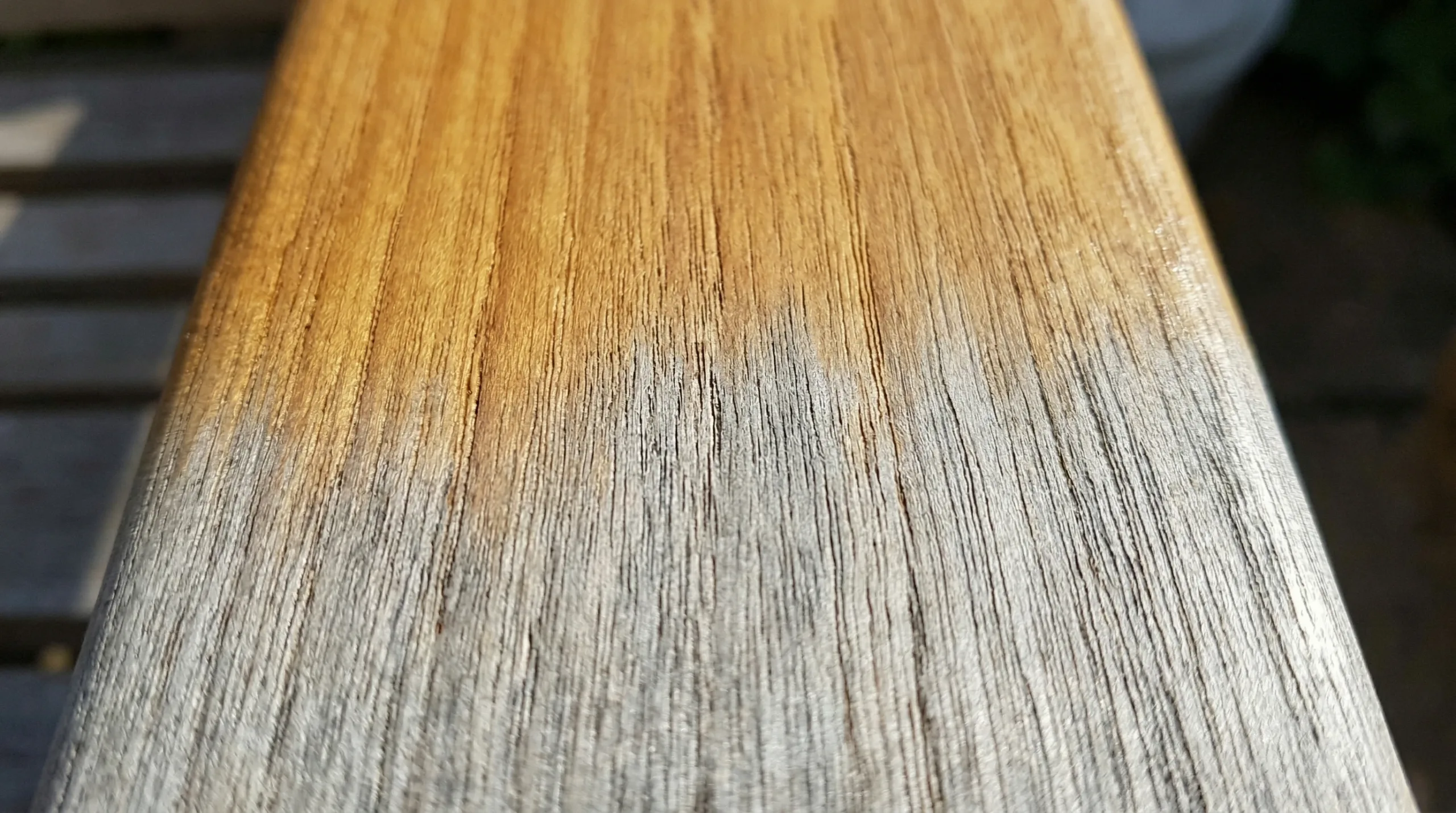
Left completely untreated, teak weathers from its original honey-gold color to a distinguished silvery-grey patina within 9-12 months of outdoor exposure. This is purely cosmetic — the structural integrity and oil content are unaffected. Many designers actually prefer the weathered look, and it’s the finish you’ll see on teak at luxury resorts, yacht clubs, and Central Park benches that have been in service for decades.
The Honey-Gold Path (Annual Oiling)
If you prefer the warm, golden-brown tone of new teak, a once-annual application of teak oil (about 30 minutes of work and $15-25 in supplies) maintains the original color. This is purely aesthetic maintenance — it doesn’t affect durability.
Pro tip: Never paint, varnish, or lacquer teak outdoor furniture. These coatings trap moisture underneath and actually accelerate degradation. Teak’s natural oil system is self-sufficient — adding a film-forming finish works against the wood’s built-in protection.
Teak vs the Competition: An Honest Comparison
Teak vs Aluminum-and-Wicker
Aluminum frames with synthetic wicker weaving are the most popular mid-range outdoor furniture choice. They’re lightweight, come in endless styles, and resist rust. But synthetic wicker degrades under UV exposure, becoming brittle and cracking within 5-8 years even with covers. The foam cushions that most wicker sets require add another failure point — they flatten, mildew, and need replacement every 2-3 seasons. Teak seating, by contrast, is comfortable without cushions (though you can certainly add them).
Teak vs Treated Pine or Cedar
Treated softwoods are the budget option. They look appealing when new but require annual staining or sealing to prevent rot, and even with diligent maintenance, most pine furniture shows significant structural degradation within 5-7 years. Cedar lasts longer (8-12 years) but still can’t match teak’s 30-50 year lifespan. The annual maintenance burden — sanding, cleaning, and recoating — is substantial compared to teak’s zero-maintenance option.
Teak vs Recycled Plastic (HDPE)
Recycled HDPE furniture (like the Seaside Casual Adirondack collection) is genuinely durable — rated for 20+ years with zero maintenance. It won’t rot, crack, or splinter. The trade-off is aesthetic: HDPE can’t replicate the grain, warmth, and natural beauty of real wood. It’s a solid choice for pool decks and casual settings, but for a curated outdoor dining space, teak’s natural presence is in a different league.
How to Evaluate Teak Quality Before You Buy
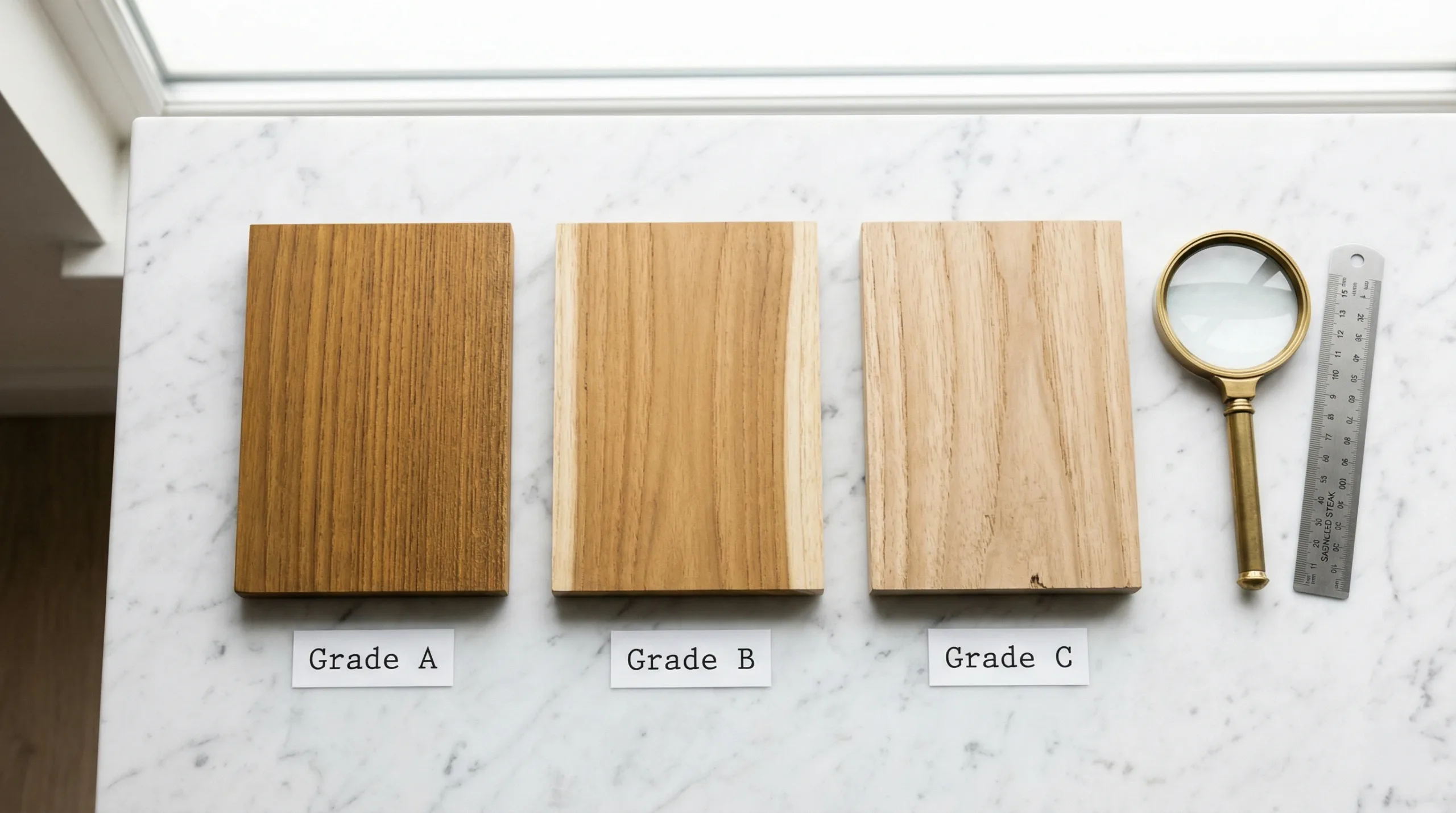
Not all teak furniture delivers on the investment promise. Here’s what separates furniture that lasts 30 years from furniture that disappoints in five:
- Grade-A heartwood — the dense center of mature trees (25+ years old). Even color, tight grain, high oil content. This is what you want.
- Grade-B — mix of heartwood and sapwood. Less oil, less consistent color. Acceptable for indoor use but risky for permanent outdoor exposure.
- Grade-C sapwood — the outer wood of younger trees. Low oil content, lighter color, significantly less durable. Avoid for outdoor furniture.
Beyond the grade, examine the construction:
- Mortise-and-tenon joinery — the gold standard. Joints lock together mechanically, not just with glue. This is what separates a Del-Amo 4-Seater Bench from a flat-pack import.
- Kiln-dried wood — reduces moisture content to 8-12%, preventing post-purchase warping
- Brass or stainless steel hardware — never black iron, which will rust and stain the wood
- Sanded finish (not lacquered) — a smooth, hand-sanded surface that lets the wood breathe
Building an Outdoor Space with Teak
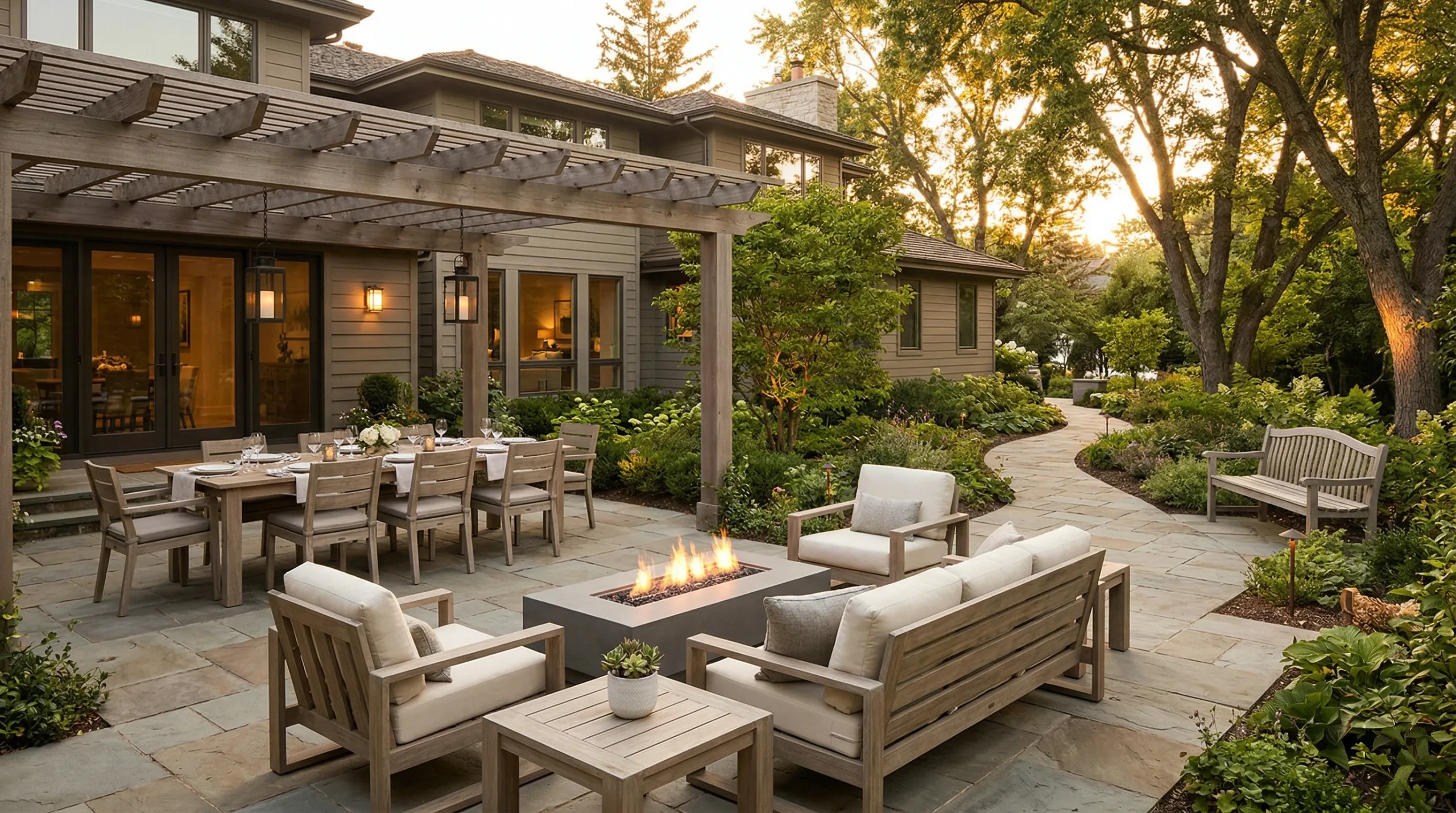
Teak works as a foundation for an entire outdoor living area — not just a dining set. The most considered outdoor spaces layer different teak pieces across zones:
- Dining zone: A teak dining set — the anchor of most outdoor entertaining spaces. Sets range from intimate 5-piece configurations to expansive 15-piece arrangements like the Valencia Rialto 15-Piece Set for larger patios.
- Lounge zone: Deep seating sets with weather-resistant cushions — the Capistrano Deep Seating Loveseat anchors a conversation area.
- Garden accents: Teak benches along garden paths, under trees, or flanking entryways. These are the pieces that age most beautifully.
Because all teak weathers to the same silver-grey patina (or maintains the same honey tone with oiling), pieces purchased years apart will eventually match. This means you can build your outdoor space over time without worrying about color coordination — something that’s impossible with painted or powder-coated alternatives.
Frequently Asked Questions
How long does teak outdoor furniture really last?
Grade-A teak outdoor furniture typically lasts 30-50 years with zero maintenance, and potentially longer with basic care. The teak benches in New York’s Central Park have been in continuous outdoor service since the 1990s and remain structurally sound. Indoor teak can last centuries.
Does teak furniture need to be covered in winter?
No. Grade-A teak handles freeze-thaw cycles, snow loads, and prolonged rain without structural damage. Covering is optional — it slows the patina process but isn’t necessary for protection. If you do cover, use breathable covers that allow air circulation. Plastic tarps trap moisture and can promote mildew on cushions.
Can I leave teak cushions outside?
The teak frames can stay out permanently, but cushions should be stored or covered when not in use for extended periods. Even marine-grade Sunbrella fabric will develop mildew if left wet for weeks at a time. Many owners use quick-dry foam cushions that can tolerate occasional rain but bring them in during extended wet seasons.
Is plantation teak as good as old-growth teak?
Grade-A plantation teak from mature trees (25+ years) is functionally equivalent to old-growth teak for furniture purposes. The oil content, density, and grain quality are comparable. The key variable is the tree’s age at harvest, not whether it grew in a managed plantation or a natural forest. Reputable manufacturers source from sustainably managed plantations in Indonesia, where teak grows in its native climate.
Why is some teak furniture so much cheaper than others?
Price differences in teak furniture come down to three factors: wood grade (A vs B vs C), construction quality (mortise-and-tenon vs dowel or staple), and finish quality (hand-sanded vs machine-finished). A $400 “teak” bench from a discount retailer likely uses Grade-C sapwood with dowel joints — it won’t deliver the 30-year lifespan that justifies teak’s price premium. You’re paying more for the wood that makes teak worth buying in the first place.
Does teak furniture hold its resale value?
Quality teak furniture retains value better than almost any other outdoor furniture material. Well-maintained teak dining sets and benches from recognized manufacturers regularly sell on secondary markets for 40-60% of their original price even after a decade of use. No aluminum, wicker, or softwood furniture achieves comparable resale value.
The question isn’t really whether teak furniture is worth the investment — the numbers make that clear. The question is whether you’re ready to buy once instead of buying four times. Browse our outdoor furniture collection to see the full range of teak dining sets, deep seating, and benches, or explore our Anderson Teak bench collection to start with a single statement piece.