Mirror
Why Mirrors Matter in Interior Design A well-placed mirror does far more than reflect your image. It amplifies natural light, creates the illusion of depth, and serves as a striking focal point that elevates a room from furnished to thoughtfully designed.
Why Mirrors Matter in Interior Design
A well-placed mirror does far more than reflect your image. It amplifies natural light, creates the illusion of depth, and serves as a striking focal point that elevates a room from furnished to thoughtfully designed. In luxury interiors, mirrors are considered architectural elements — as essential as the furniture they complement.
Whether you’re working with a compact entryway or a sprawling living room, the right mirror can transform the entire character of a space. The key lies in choosing the correct size, shape, frame style, and placement for each room’s unique purpose.
The Golden Rules of Mirror Sizing
Before selecting a specific mirror, understand these fundamental proportions that designers rely on.
The Two-Thirds Rule
A mirror should be approximately two-thirds the width of the furniture it hangs above. For a 60-inch console table, aim for a mirror around 36 to 42 inches wide. This creates visual balance without overwhelming the piece below.
The Height Consideration
The center of a wall-mounted mirror should sit at eye level — roughly 57 to 65 inches from the floor. For mirrors above furniture, leave 4 to 8 inches of space between the top of the furniture and the bottom of the frame.
Scale With the Room, Not Just the Wall
A common mistake is choosing a mirror that fits the wall but ignores the room’s volume. In rooms with high ceilings, a vertically oriented mirror or a floor-to-ceiling leaner creates appropriate scale. In lower-ceilinged spaces, a horizontal mirror draws the eye outward and makes the room feel more expansive.
Room-by-Room Mirror Guide
Entryway and Foyer
The entryway sets the tone for your entire home. A statement mirror here serves a practical purpose — a last-minute check before heading out — while immediately signaling your design sensibility to guests.
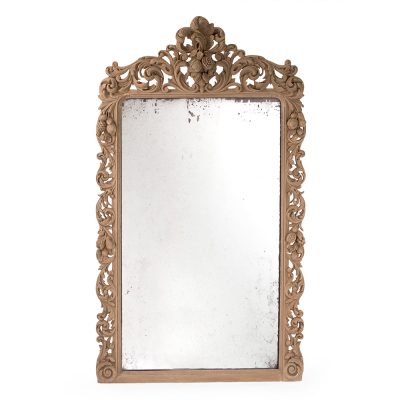
Best styles: Oversized round mirrors, ornate framed pieces, or a grand floor mirror leaned against the wall for a collected, editorial look.
Ideal sizing: 24 to 36 inches wide for narrow entries. For grand foyers with console tables, scale up to 36 to 48 inches. If ceiling height permits, a grand floor mirror like the Zentique Estelle Mirror ($3,149) makes an unforgettable first impression. Crafted from solid Chinese walnut with a serene natural dry finish, the Estelle stands 75 inches tall — its rich organic grain patterns commanding attention from the moment guests cross the threshold.
Designer tip: Position an entryway mirror to reflect a window or light source from an adjacent room. This doubles the natural light reaching what is often the darkest part of the home.
Living Room
The living room is where mirrors earn their reputation as space-transforming tools. Above a fireplace, a mirror becomes the room’s natural focal point. Above a sofa or console, it adds depth and dimension to your seating arrangement.
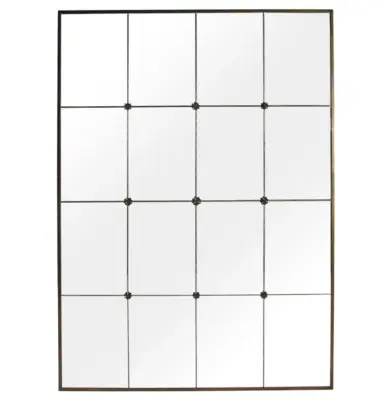
Above the fireplace: Choose a mirror 4 to 6 inches narrower than the mantel on each side. A 48 to 60-inch mantel calls for a 36 to 48-inch mirror. Ornate frames in gold or aged finishes pair beautifully with traditional mantels — the Zentique Franco Mirror ($999) is a masterful example. Its multi-sectioned windowpane grid in antique gold divides the reflection into an architectural composition — part mirror, part art — that pairs beautifully with traditional and transitional mantels alike.
Above a console or credenza: Apply the two-thirds rule. Gallery-style arrangements with multiple smaller mirrors — mixing shapes and frame finishes — create a curated, collected look that feels more personal than a single large piece.
Leaner mirrors: A full-length leaner mirror propped against a wall adds drama and makes the room feel significantly larger. The Monumental Venetian Grand Mirror ($2,365) at nearly 79 inches wide is a true statement piece for spacious living rooms.
Dining Room
Mirrors in the dining room amplify the warm glow of candlelight and make dinner parties feel more expansive and intimate at once. They also reflect beautiful table settings, effectively doubling the visual impact of your entertaining.
Best placement: On the wall opposite or adjacent to windows. Avoid placing a mirror directly behind the head of the table — guests seated with their backs to it may find it distracting.
Ideal sizing: A single mirror 40 to 60 inches wide, or a pair of matching mirrors flanking a buffet or sideboard. The Monte Carlo Gold Vertical Mirror ($995) pairs beautifully with formal dining spaces.
Bedroom
The bedroom demands a more considered approach. Function matters here — you need to see your full outfit — but the mirror should also contribute to the room’s restful atmosphere.
Full-length options: A floor mirror at least 58 inches tall and 18 to 24 inches wide provides a complete view. Place it in a corner or beside the dresser where it catches morning light. The Crystal Wave Leaner Mirror ($1,195) combines function with an artful crystal frame that catches and scatters light throughout the room.
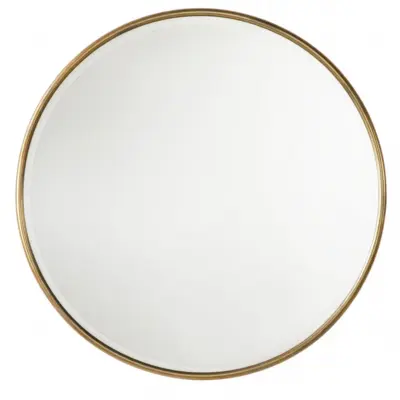
Above the dresser: Follow the two-thirds rule relative to the dresser width. Round or oval mirrors above a rectangular dresser create pleasing visual contrast. The Zentique Ali Mirror ($699) is ideal here — a generous round silhouette wrapped in a hand-hammered iron frame with a luminous antique gold finish. Its artisan texture catches and scatters light across the room, adding warmth that a sleek frameless mirror simply cannot.
Feng shui note: Many design traditions advise against placing mirrors directly opposite the bed. If this concerns you, position the mirror on a side wall or at an angle.
Bathroom
Bathroom mirrors are the most functional of all, but functionality doesn’t preclude beauty. Replacing a basic builder-grade mirror with a framed piece is one of the highest-impact upgrades you can make.
Above the vanity: The mirror should be the same width as the vanity or slightly narrower. For a double vanity, either one large mirror spanning the full width or two individual mirrors centered above each sink.
Ideal sizing: 24 inches wide for a 30-inch vanity, 30 to 36 inches for a 48-inch vanity, and 36 to 48 inches for a 60-inch double vanity. Round mirrors — 24 to 30 inches in diameter — are a popular alternative that softens the angular lines typical of bathrooms.
Choosing the Right Mirror Style
| Style | Best For | Frame Materials | Price Range |
|---|---|---|---|
| Ornate Traditional | Formal living rooms, dining rooms, foyers | Carved wood, gilded gold, antique silver | $250 – $2,400 |
| Rustic / Reclaimed | Farmhouse kitchens, casual living spaces | Weathered wood, distressed finishes | $230 – $1,700 |
| Modern Minimalist | Contemporary bedrooms, sleek bathrooms | Thin metal, frameless, geometric shapes | $100 – $500 |
| Venetian / Glam | Master bedrooms, formal entries, powder rooms | Etched glass, crystal accents, beveled edges | $500 – $2,400 |
| Floor Leaner | Bedrooms, dressing areas, large living rooms | Any — wood, metal, ornate, or simple | $475 – $2,000 |
Mirror Placement Mistakes to Avoid
Even the perfect mirror loses its impact with poor placement. Watch for these common errors:
Reflecting clutter: A mirror doubles whatever it sees. Before hanging, stand in position and check what the mirror will reflect. Aim for windows, artwork, or attractive architectural details — not the back of a door or a cluttered shelf.
Hanging too high: This is the most common mistake. Mirrors hung above eye level make a room feel top-heavy and lose their space-expanding benefit. Remember: center at 57 to 65 inches from the floor.
Ignoring light sources: A mirror in a dark corner with no light to reflect adds nothing to the room. Position mirrors where they can catch and redistribute natural or ambient light.
Mismatched scale: A small decorative mirror above a large sofa looks like an afterthought. When in doubt, go larger — an oversized mirror always reads as more intentional than an undersized one.
Too many mirrors: Three or more mirrors in the same room can create a disorienting funhouse effect. In most rooms, one statement mirror or a thoughtfully arranged pair is sufficient.
How to Shop for Quality
Not all mirrors are created equal. When investing in a statement piece, look for these markers of quality:
Glass thickness: Quality mirrors use glass at least 5mm thick. Thinner glass produces subtle distortion that cheapens the reflection.
Frame construction: Solid wood or metal frames outlast composite materials. Hand-applied finishes — gilding, antiquing, patina washes — develop character over time rather than peeling or chipping. Brands like Zentique and AFD Home are known for artisan-quality frame construction.
Backing and hanging hardware: A quality mirror comes with a proper French cleat or heavy-duty D-ring system, not a flimsy wire. For mirrors over 30 pounds, professional installation with wall anchors is strongly recommended.
Browse our full collection of over 700 designer mirrors — from hand-carved Zentique pieces to contemporary Whiteline designs — with complimentary shipping on every order.
Frequently Asked Questions
What size mirror should I put above a 48-inch vanity?
Choose a mirror 30 to 36 inches wide for a 48-inch single vanity. This follows the two-thirds proportion rule while leaving enough visual breathing room on each side. For a more dramatic look, you can go up to the full width of the vanity, but never wider.
Can a mirror be too big for a room?
Technically yes, but in practice, oversized mirrors work surprisingly well — especially leaners and floor mirrors. The space-expanding illusion they create outweighs concerns about proportion. The exception is small bathrooms, where an oversized mirror can feel overwhelming in an intimate space.
Where should you not put a mirror in a house?
Avoid placing mirrors directly opposite the front door (it can bounce energy right back out), directly facing the bed (can be unsettling at night), or reflecting unsightly views like messy storage areas or stark hallways. Also avoid placing mirrors where they catch direct sunlight for extended periods, as this can create uncomfortable glare and fade nearby furnishings.
Do round mirrors make a room look bigger?
Round mirrors soften a room and reduce visual weight, which can make a space feel more open and airy. However, a rectangular mirror of the same surface area creates a stronger “window” illusion that is more effective at actually expanding the perceived space. Choose round for aesthetics and softness; choose rectangular for maximum space-enhancing effect.
How do I choose between a wall mirror and a floor mirror?
Wall mirrors work best when you need to preserve floor space or want to anchor a specific piece of furniture (above a console, fireplace, or dresser). Floor mirrors — whether standing or leaned — are ideal when you want a full-length view, need to fill a tall vertical space, or prefer the relaxed editorial look of a casually leaned piece. Floor mirrors also have the advantage of being easily repositioned without putting new holes in the wall.