
 Mirror
You've found the perfect chandelier for your dining room. Now you need sconces for the hallway, the staircase, or flanking the fireplace — and suddenly a simple lighting project becomes a coordination puzzle.
You’ve found the perfect chandelier for your dining room. Now you need sconces for the hallway, the staircase, or flanking the fireplace — and suddenly a simple lighting project becomes a coordination puzzle. Do your chandelier and sconces need to match exactly? Can you mix finishes? What about mixing styles?
The answer is more nuanced than “just buy the matching set.” Coordinating your chandelier with sconces is about creating visual cohesion without making a room feel like a showroom display. The best-designed homes use lighting fixtures that converse with each other rather than shout the same thing. This guide walks through the three proven coordination strategies, the rules that actually matter, and the one mistake that makes even expensive fixtures look wrong.
The Three Coordination Strategies
Every successful chandelier-and-sconce pairing falls into one of three approaches. Understanding which one fits your space is the first decision to make.
Strategy 1: Same Collection (The Guaranteed Match)
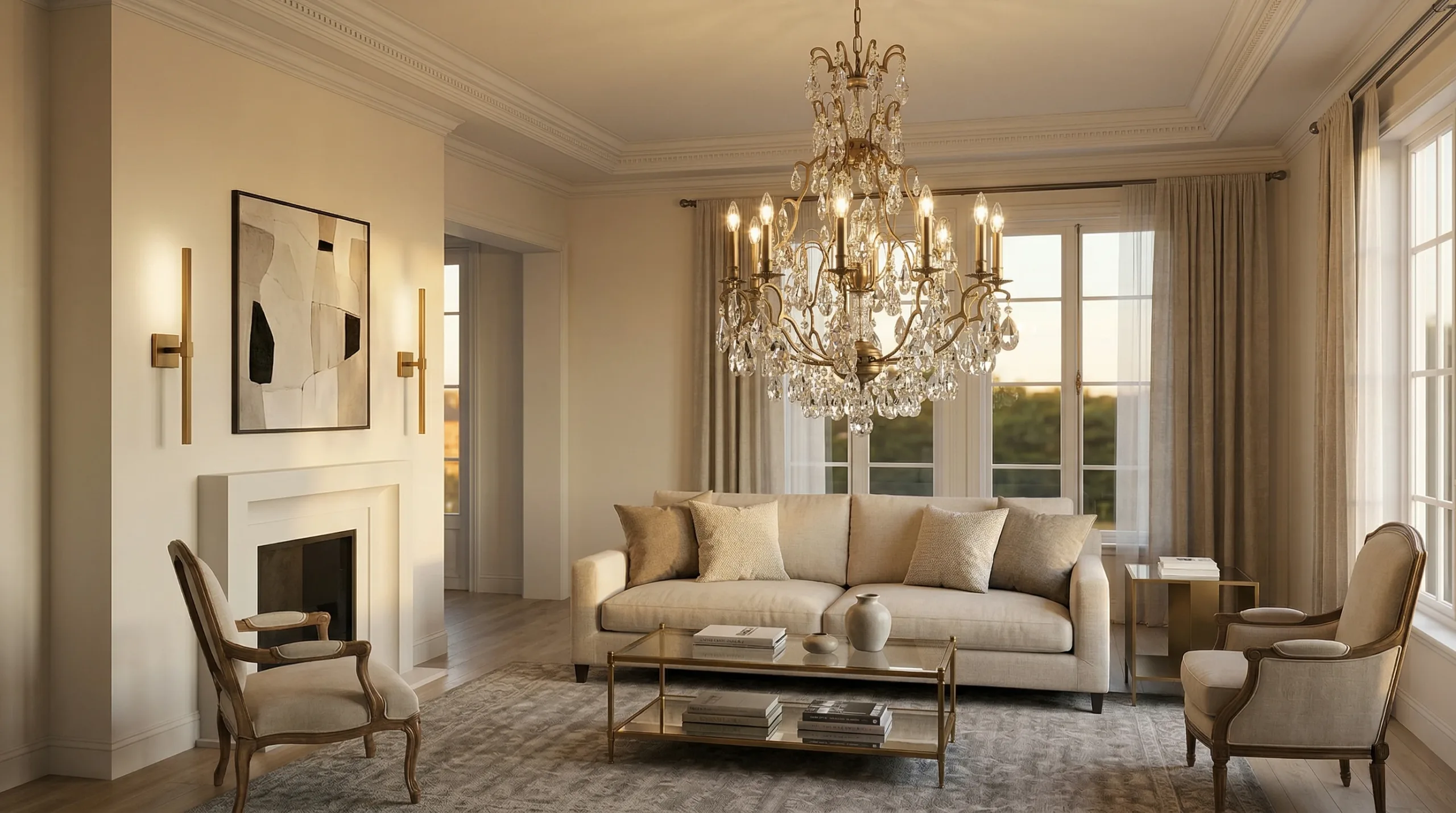
The simplest and most reliable approach — choose a chandelier and sconces from the same manufacturer’s collection. The finishes, proportions, and design language are engineered to work together. The Maria Theresa 6-Light Chandelier in Old World Gold paired with the Maria Theresa 2-Light Sconce in Old World Gold is a textbook example — same crystal drops, same metallic finish, same ornamental vocabulary, different scale.
When to use this approach: Formal rooms where lighting is the primary decorative element — dining rooms, grand entryways, and formal living rooms. Same-collection pairings project intentionality and authority.
The risk: It can read as overly “matched” or catalog-perfect if overdone. Emily Henderson, the design blogger, calls this the “matching pajama set” problem — technically correct but lacking personality. The antidote is to limit same-collection pairings to one room rather than carrying them throughout the house.
Strategy 2: Same Finish, Different Style (The Designer Move)
This is the approach most interior designers use. Choose a chandelier and sconces that share the same metallic finish — both in antique brass, both in chrome, both in old world gold — but differ in their design style. A crystal chandelier with sleek, modern brass sconces. A rustic iron chandelier with minimalist iron wall lights.
The shared finish creates the visual thread that ties the room together, while the style variation adds depth and interest. Consider pairing the Versailles 9-Light Chandelier in Antique Brass with simpler antique brass sconces from a different collection — the finish coordinates while the different silhouettes prevent monotony.
When to use this approach: Open floor plans, transitional spaces, and any room where you want sophistication without rigidity. This is the most versatile strategy and works in virtually every design style.
Strategy 3: Same Metallic Family, Different Finishes (The Expert Play)
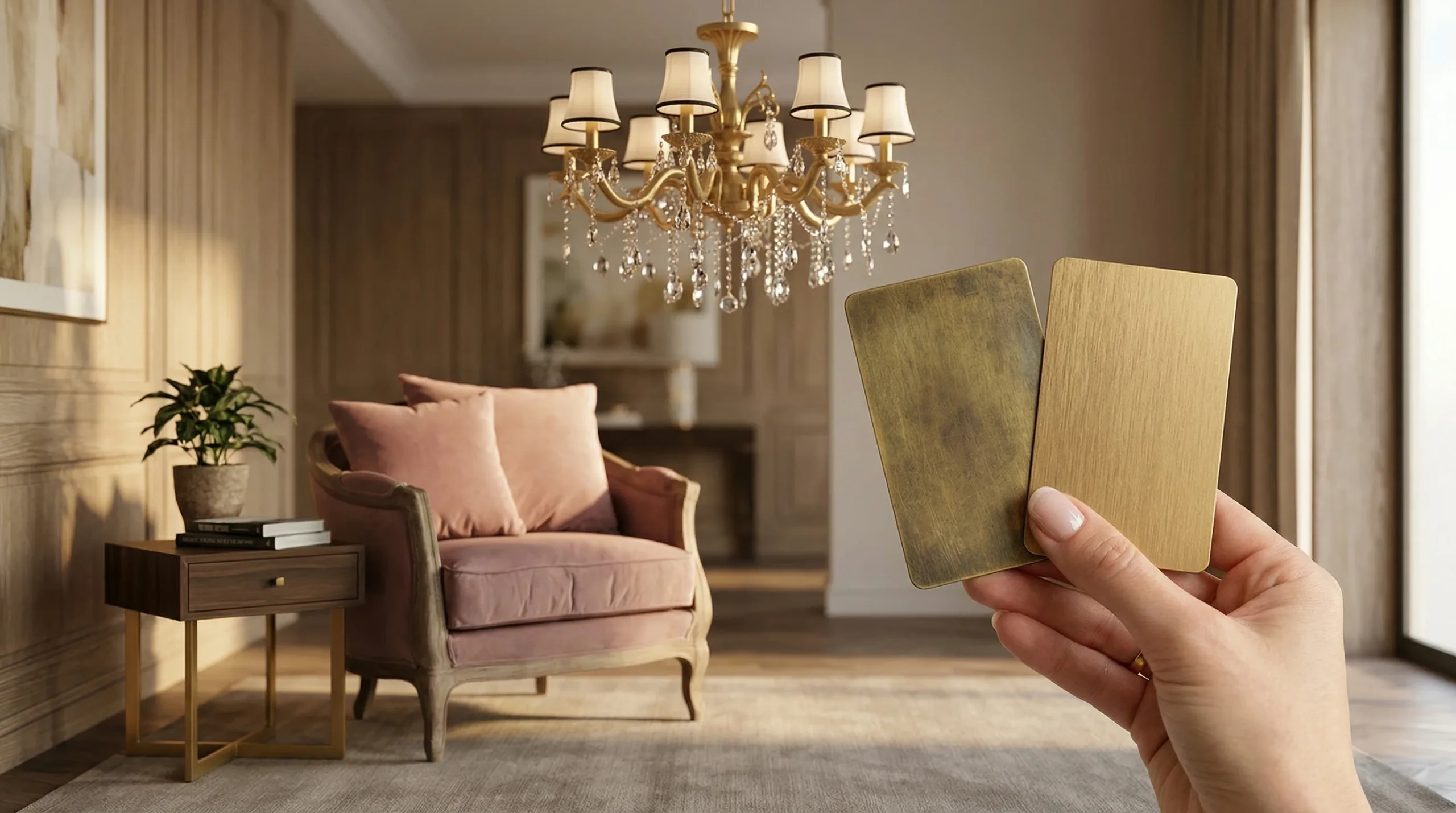
The most advanced approach — mixing finishes within the same warm or cool metallic family. Brass chandelier with gold sconces. Chrome chandelier with polished nickel sconces. This creates subtle tonal variation that feels collected and evolved rather than purchased all at once.
When to use this approach: When you want a room to feel curated over time, or when you’re working with existing fixtures you don’t want to replace. This also works beautifully when the chandelier and sconces serve different zones — dining chandelier in old world gold with hallway sconces in antique brass, as we explored in our brass vs gold lighting guide.
Pro tip: When mixing chandelier and sconce finishes, match the finish of your sconces to the smaller metallic elements in the room — cabinet hardware, curtain rods, picture frames. This creates a web of coordinated accents that makes the different lighting finishes feel intentional.
The Rules That Actually Matter
Forget the outdated “everything must match” advice. These are the coordination principles that professional lighting designers actually follow.
Rule 1: Match the Metal Temperature
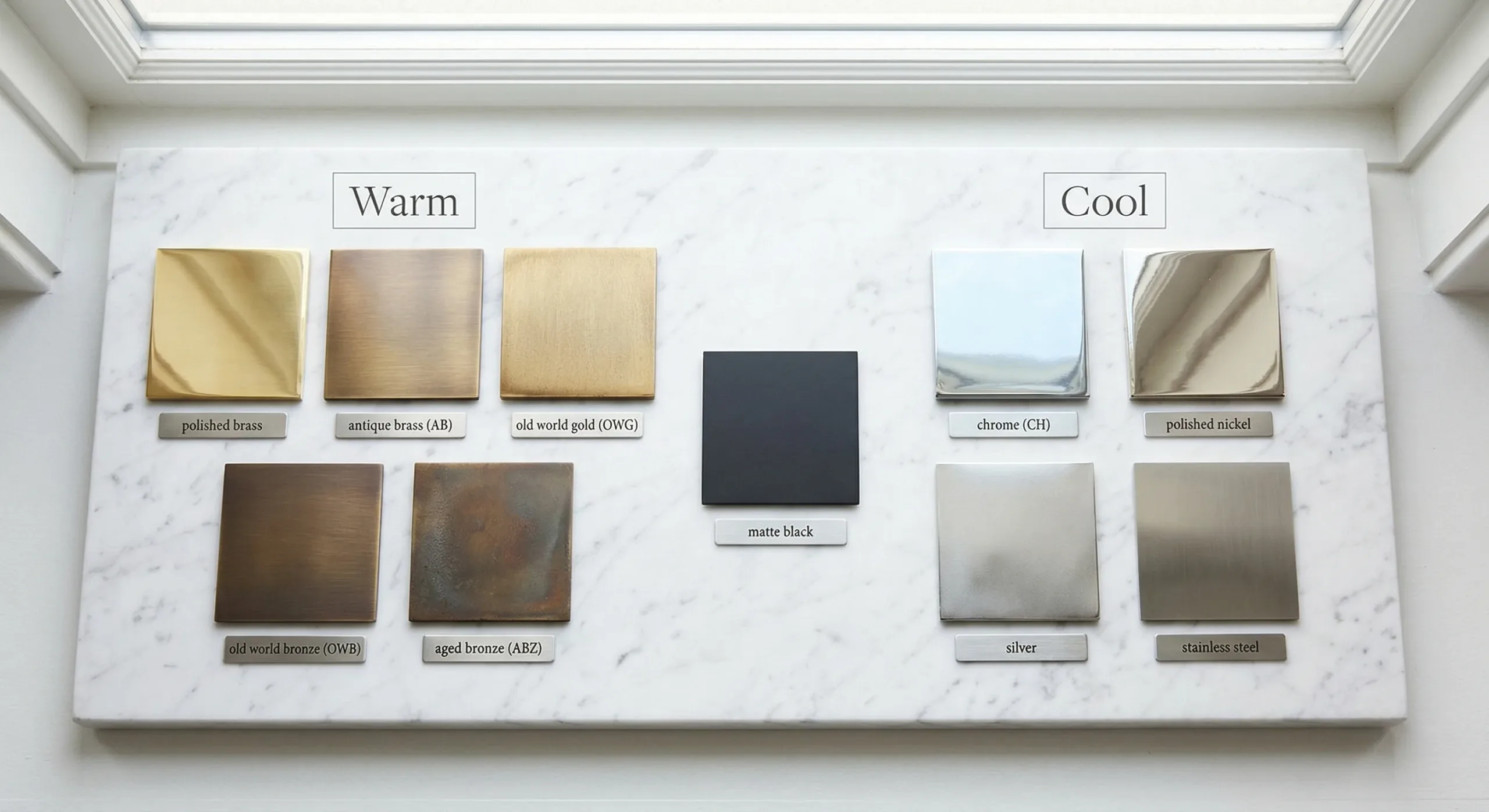
This is the only non-negotiable rule. Keep all visible lighting fixtures within the same temperature family:
- Warm metals: brass, gold, bronze, copper, oil-rubbed bronze
- Cool metals: chrome, polished nickel, silver, stainless steel
- Neutral metals: matte black, gunmetal (these bridge both families)
A brass chandelier with chrome sconces creates visual tension that reads as a mistake, not a design choice. A brass chandelier with bronze sconces reads as layered and intentional. The difference isn’t subtle — it’s the single most common lighting coordination error in homes.
Rule 2: Scale the Light Count Proportionally
Your sconces should carry fewer lights than your chandelier — they’re supporting characters, not co-stars. A general guideline:
| Chandelier Size | Recommended Sconce Size |
|---|---|
| 5-6 lights | 1-2 light sconces |
| 8-12 lights | 2-3 light sconces |
| 16+ lights | 3-5 light sconces |
A 16-light chandelier paired with single-light sconces creates too much contrast in visual weight. The sconces look like afterthoughts. But the same chandelier paired with 5-light crystal sconces maintains appropriate hierarchy — the chandelier is still dominant, but the sconces hold their own.
Rule 3: Share at Least One Design Element
Even when mixing styles, your chandelier and sconces should share at least one visual element beyond metal finish:
- Crystal type — both use the same crystal shape (pendalogue, octagonal, teardrop)
- Shade style — both use fabric shades, or both are exposed-bulb
- Structural motif — both feature curved arms, or both use angular geometry
- Era reference — both draw from the same period (Art Deco, Victorian, mid-century)
Rule 4: Consider the Sightline
Fixtures that are visible simultaneously need to coordinate more carefully than fixtures in separate rooms. Sconces flanking a fireplace directly below a chandelier need to be tightly coordinated — they’re in the same visual frame. Sconces in a hallway visible from the dining room have more freedom — they’re in a related but separate context.
Room-by-Room Coordination Guide
Dining Room + Adjacent Hallway
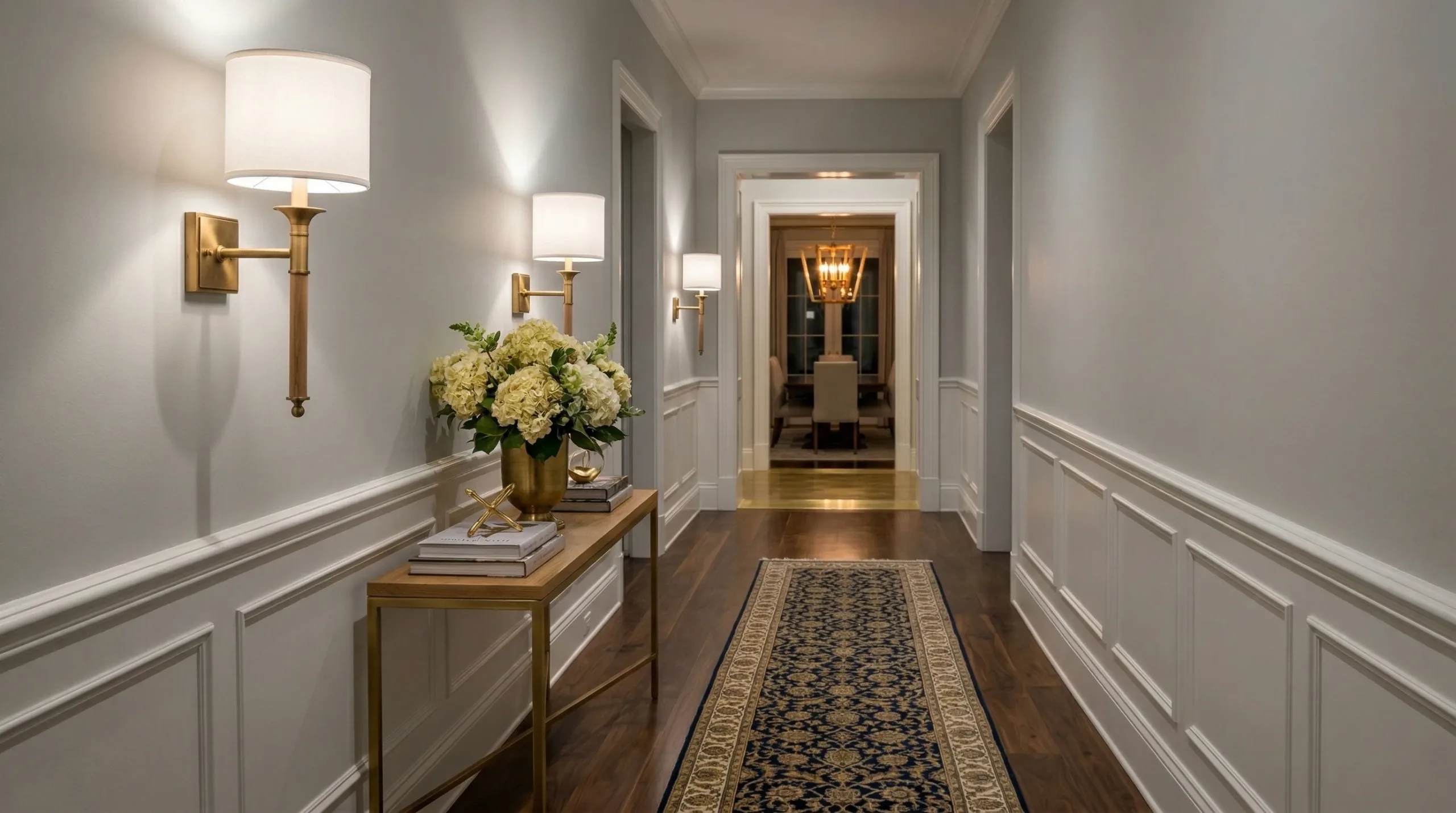
The most common coordination challenge. Your dining room chandelier is the hero — choose it first, then select hallway sconces that echo its finish. If the chandelier is ornate, the hallway sconces can be simpler (same finish, cleaner lines). This creates a natural transition from formal to casual as you move through the space.
Living Room + Flanking Sconces
Sconces flanking a fireplace or artwork in the same room as a chandelier or pendant need tight coordination — same finish at minimum, ideally same collection or shared design elements. Browse our wall sconce collection to find pieces that pair with your existing fixtures.
Entryway + Staircase
A foyer chandelier with staircase sconces is one of the most impactful coordination opportunities in a home. Same-collection pairings shine here because the fixtures are often visible together from multiple angles. The vertical journey from the entry up the stairs creates a natural narrative for your lighting story.
Bathroom
Bathroom vanity lights don’t need to match your dining chandelier — different rooms can have different metallic temperatures. But within the bathroom, match your vanity lights to your faucet and hardware finish for a cohesive look.
The One Mistake to Avoid
Don’t buy cheap sconces to “save budget” when your chandelier is a statement piece. A $5,000 crystal chandelier paired with $80 big-box sconces doesn’t look like smart budgeting — it looks like an oversight. The quality gap is immediately visible in the metallic finish, crystal clarity, and construction detail.
If budget is a constraint, invest in fewer, better sconces rather than more cheap ones. Two well-made Barcelona 1-Light Sconces will look far more cohesive with a quality chandelier than four discount alternatives.
Frequently Asked Questions
Do chandeliers and sconces have to be the same brand?
No. Same-brand, same-collection pairings are the easiest route but not the only one. What matters is shared finish and at least one common design element. Many of the best-designed rooms pair fixtures from different manufacturers — the key is coordinating the metallic finish and overall style language.
Can I mix crystal chandeliers with non-crystal sconces?
Yes, if they share the same metal finish. A crystal chandelier with simple metal sconces in the same finish is a classic designer pairing — the chandelier provides the drama while the sconces offer clean, understated support. The reverse (crystal sconces with a simple chandelier) can also work but is less common.
How many sconces do I need per chandelier?
There’s no fixed ratio. The most common configurations are two sconces flanking a fireplace, mirror, or artwork; or a series of sconces along a hallway or staircase (typically spaced 6-8 feet apart). The sconces should complement the chandelier’s light output, not compete with it — use dimmer switches on both to fine-tune the balance.
Should bathroom sconces match the dining chandelier?
Not necessarily. Bathrooms operate as self-contained design environments. Your bathroom sconces should match your bathroom hardware (faucet, towel bars, shower fixtures) rather than lighting in other rooms. If your bathroom is visible from the dining room through an open floor plan, then coordinating the metallic temperature is wise.
Can I use matte black sconces with a brass chandelier?
Yes — matte black is a neutral metal that bridges warm and cool families. Black sconces with a brass chandelier is a popular contemporary combination that feels intentional and modern. The contrast works because matte black reads as a structural element rather than a competing metallic finish.
What if my home already has mismatched fixtures?
Start with the most visible fixture — usually the dining chandelier or entryway pendant — and replace the immediately adjacent fixtures first. You don’t need to overhaul every fixture at once. Replacing just the hallway sconces to coordinate with an existing dining chandelier can transform how the space reads for a fraction of a full remodel.
The best lighting schemes tell a story — from the grand statement of a chandelier to the supporting warmth of coordinated sconces. Whether you match exactly or mix with intention, the result should feel considered, not accidental. Browse our complete lighting collection to find pairs that work for your space, or reach out to our concierge team for personalized coordination advice.