
 Mirror
The Room Size Formula Every Designer Uses There is a surprisingly simple formula that interior designers have relied on for decades, and it works for nearly every space in your home. Add the room's length and width in feet — that sum, converted to inches, is your ideal chandelier diameter.
The Room Size Formula Every Designer Uses
There is a surprisingly simple formula that interior designers have relied on for decades, and it works for nearly every space in your home. Add the room’s length and width in feet — that sum, converted to inches, is your ideal chandelier diameter. A 12-by-14-foot dining room, for example, calls for a chandelier roughly 26 inches across.
This quick calculation takes the guesswork out of the process. It accounts for the visual weight a fixture needs to anchor a room without overwhelming it. Too small, and the chandelier looks like an afterthought floating in space. Too large, and the room feels cramped before anyone sits down.
Calculating Chandelier Diameter
Measure your room at its widest points and add those two numbers together. For rectangular rooms, use the length and width. For open-concept spaces, measure the zone the chandelier will serve — not the entire floor plan.
| Room Size (ft) | Formula Result | Recommended Diameter |
|---|---|---|
| 10 × 10 | 20 inches | 18–22 inches |
| 12 × 14 | 26 inches | 24–28 inches |
| 14 × 18 | 32 inches | 30–34 inches |
| 16 × 20 | 36 inches | 34–38 inches |
| 20 × 24 | 44 inches | 42–48 inches |
Give yourself a two-inch margin in either direction. The formula is a starting point, not a rigid rule. Rooms with higher ceilings or darker walls can accommodate a slightly larger fixture, while low-ceilinged spaces benefit from staying on the smaller side.
Calculating Chandelier Height
A chandelier’s vertical proportion matters just as much as its diameter. The standard guideline: multiply your ceiling height in feet by 2.5 to get the ideal chandelier height in inches. A room with 10-foot ceilings suits a chandelier about 25 inches tall.
This ensures the fixture has enough visual presence without hanging so low it blocks sightlines or so high it looks stranded against the ceiling. For rooms with ceilings above 12 feet, consider a two-tier chandelier or a design with extended crystal drops to fill the vertical space gracefully.
Chandelier Sizing by Room
Every room has its own relationship with light. A dining room demands a fixture that draws the eye downward toward the table, while a foyer needs one that fills a tall, narrow space. Here is how to tailor the formula to the rooms where chandeliers make the biggest impact.
Dining Room
The dining room is where chandelier sizing becomes most specific, because the fixture relates to the table — not just the room. Your chandelier should be one-half to two-thirds the width of your dining table. A 48-inch round table pairs beautifully with a chandelier between 24 and 32 inches in diameter.
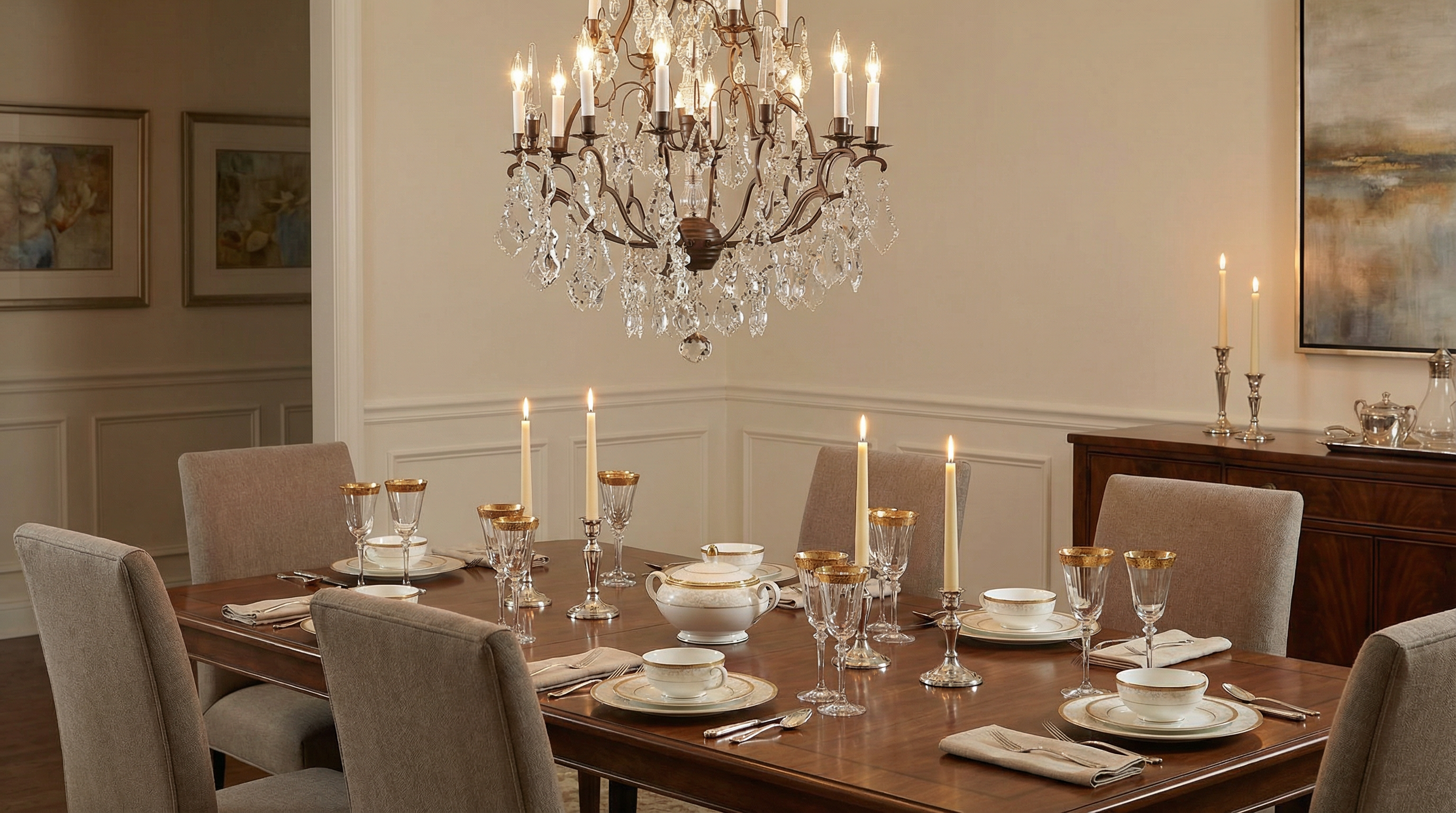
Hang the bottom of the fixture 30 to 36 inches above the table surface. This places the light at a flattering angle for faces while keeping the chandelier out of the line of sight across the table. For a formal dining room with a longer rectangular table, the Versailles 13-Light Chandelier in antique brass offers the kind of grand yet balanced presence that commands a room without crowding it.
Pro tip: If your dining table seats eight or more, consider pairing two smaller chandeliers spaced evenly along the table’s length rather than one oversized fixture. This creates a layered look that feels intentional and avoids the “ballroom” effect.
Foyer and Entryway
A foyer chandelier sets the tone for your entire home. The room formula applies here, but ceiling height takes priority. In a two-story foyer with ceilings above 15 feet, scale up by 25 to 30 percent — a space that calls for a 28-inch fixture by the standard formula can comfortably support a 34- to 36-inch chandelier.
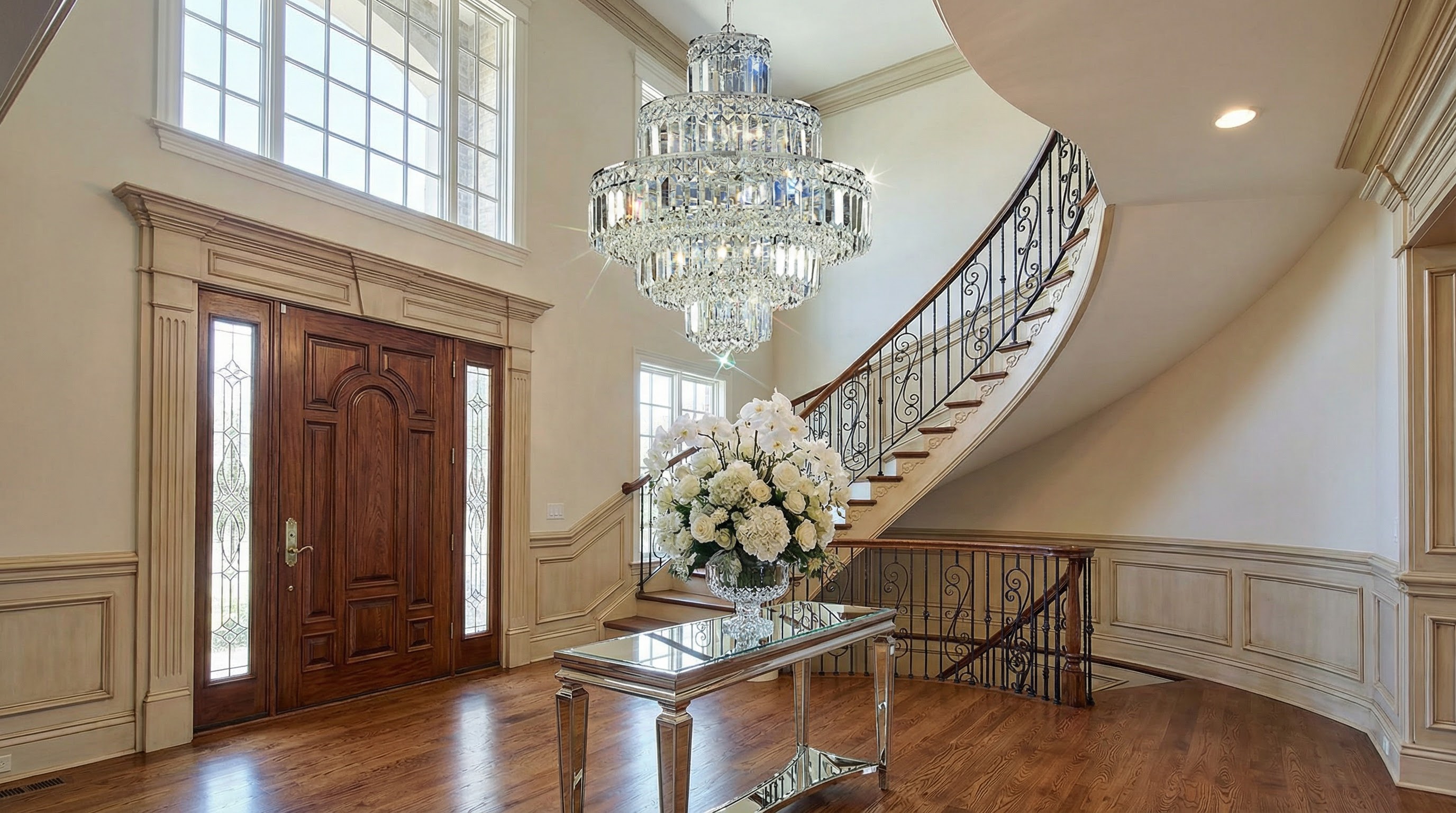
Hang the fixture so its lowest point sits at least seven feet above the floor if anyone walks beneath it. The Ambassador 12-Light Chandelier in chrome with crystal accents is designed for exactly this kind of statement entrance — substantial enough to fill a tall space while the crystal drops catch light from every angle.
Living Room
Living rooms are more forgiving because the chandelier typically centers over a seating arrangement rather than a table. Use the standard room formula for diameter, and hang the fixture at least seven feet above the floor. In living rooms with vaulted or cathedral ceilings, the chandelier can hang lower than you might expect — it is the relationship to the furniture grouping, not the ceiling, that matters.
For grand living rooms, the Versailles 25-Light Chandelier anchors the space with unmistakable presence. In more intimate sitting areas, a 6- to 10-light fixture keeps the atmosphere warm without competing with the conversation below.
Bedroom
Bedrooms call for restraint. The chandelier should feel like a finishing touch, not a centerpiece. Subtract two to four inches from the room formula result to find the sweet spot. A 12-by-14-foot bedroom that would normally suggest 26 inches works better with a 22- to 24-inch fixture — or a mini-chandelier for something more intimate.
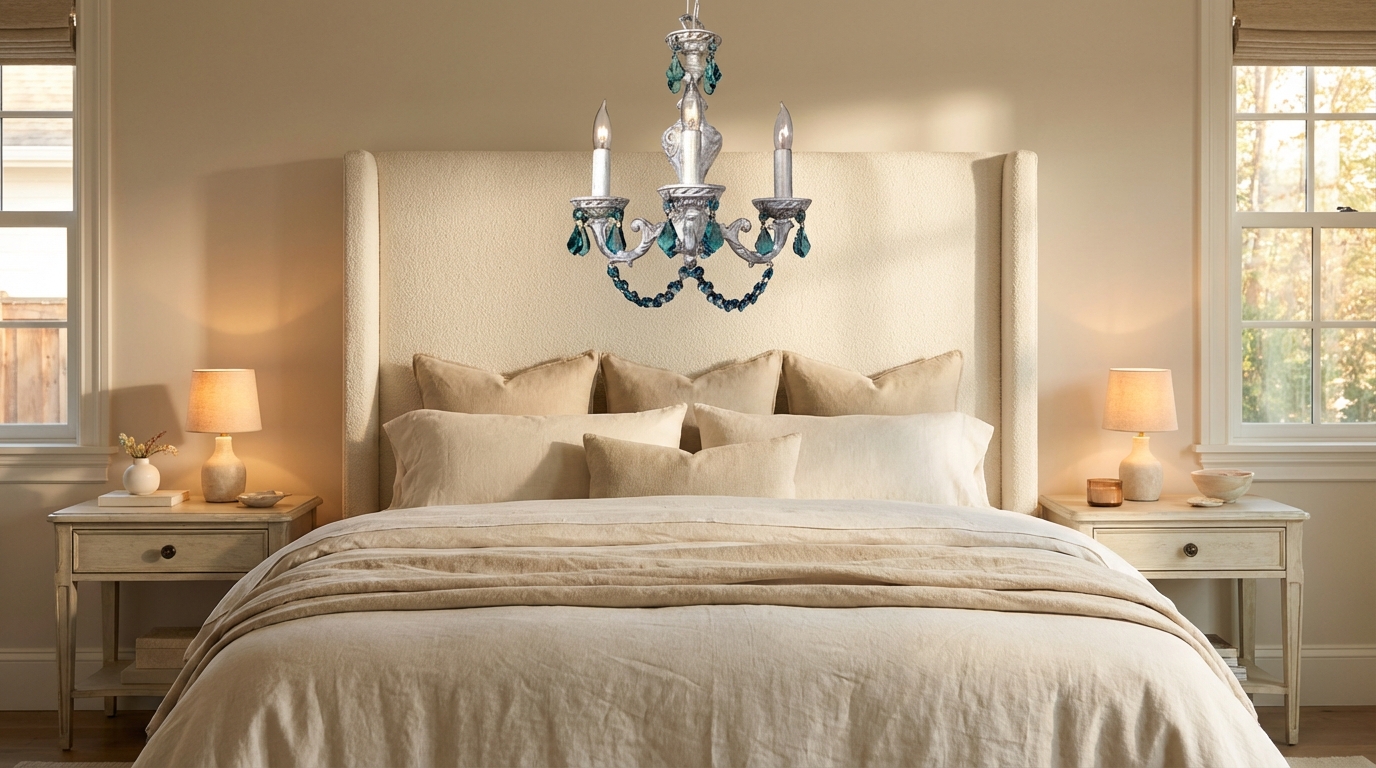
The Gabrielle Color 4-Light Mini-Chandelier is an ideal bedroom choice. At four lights, it provides soft ambient illumination without overwhelming the space, and its antique white and gold finish pairs naturally with neutral bedroom palettes.
Bathroom and Powder Room
A chandelier in a powder room or bathroom is an unexpected luxury that immediately elevates the space. These rooms are small enough that even a compact 12- to 18-inch fixture makes a statement. Mini-chandeliers and flush mount fixtures are the natural choice here, especially in bathrooms with standard 8-foot ceilings.
Ensure the fixture is rated for damp locations if installed within the bathroom proper. Over a freestanding bathtub, a small chandelier hung at least eight feet above the floor creates the kind of atmosphere that turns a daily routine into a ritual.
How Hanging Height Changes Everything
The same chandelier can look dramatically different depending on how high you hang it. Too high, and it becomes ceiling decor that no one notices. Too low, and it obstructs views and feels intrusive. The ideal height creates a visual anchor — a focal point that draws the eye naturally without demanding attention.
Here are the standard guidelines by context:
- Over a dining table: 30–36 inches above the table surface
- In a foyer or open room: bottom of the fixture at least 7 feet above the floor
- Over a kitchen island: 30–34 inches above the countertop
- In a stairwell: center the fixture vertically in the stairwell opening, visible from both levels
For every additional foot of ceiling height above 8 feet, raise the chandelier 3 inches. A dining room with 10-foot ceilings, for instance, should hang the fixture about 36 to 42 inches above the table rather than the standard 30 to 36.
When to Choose a Mini-Chandelier, Pendant, or Flush Mount
Not every room needs — or can accommodate — a full-size chandelier. Knowing when to pivot to a different fixture type is just as important as getting the sizing right.
Mini-chandeliers (typically 12 to 20 inches in diameter with 3 to 5 lights) suit bedrooms, walk-in closets, breakfast nooks, and powder rooms. They deliver the sparkle and elegance of a chandelier at a scale that fits tighter spaces. The Via Venteo 4-Light Mini-Chandelier in Roman bronze with crystal accents is a prime example — refined enough for a formal powder room yet restrained enough not to overwhelm it. Browse the full mini-chandelier collection for more options.
Pendants work best over kitchen islands, bars, and reading nooks. A row of two or three pendant lights spaced 24 to 30 inches apart creates rhythm and task lighting without the visual weight of a single large fixture.
Flush and semi-flush mounts are the answer for ceilings under 8 feet where a hanging fixture would feel oppressive. Semi-flush mounts hang 4 to 8 inches below the ceiling, preserving headroom while still delivering decorative impact. They are also the practical choice for hallways, laundry rooms, and secondary bedrooms.
Common Chandelier Sizing Mistakes
Even with the formulas in hand, these are the errors designers see most often — and the fixes are straightforward.
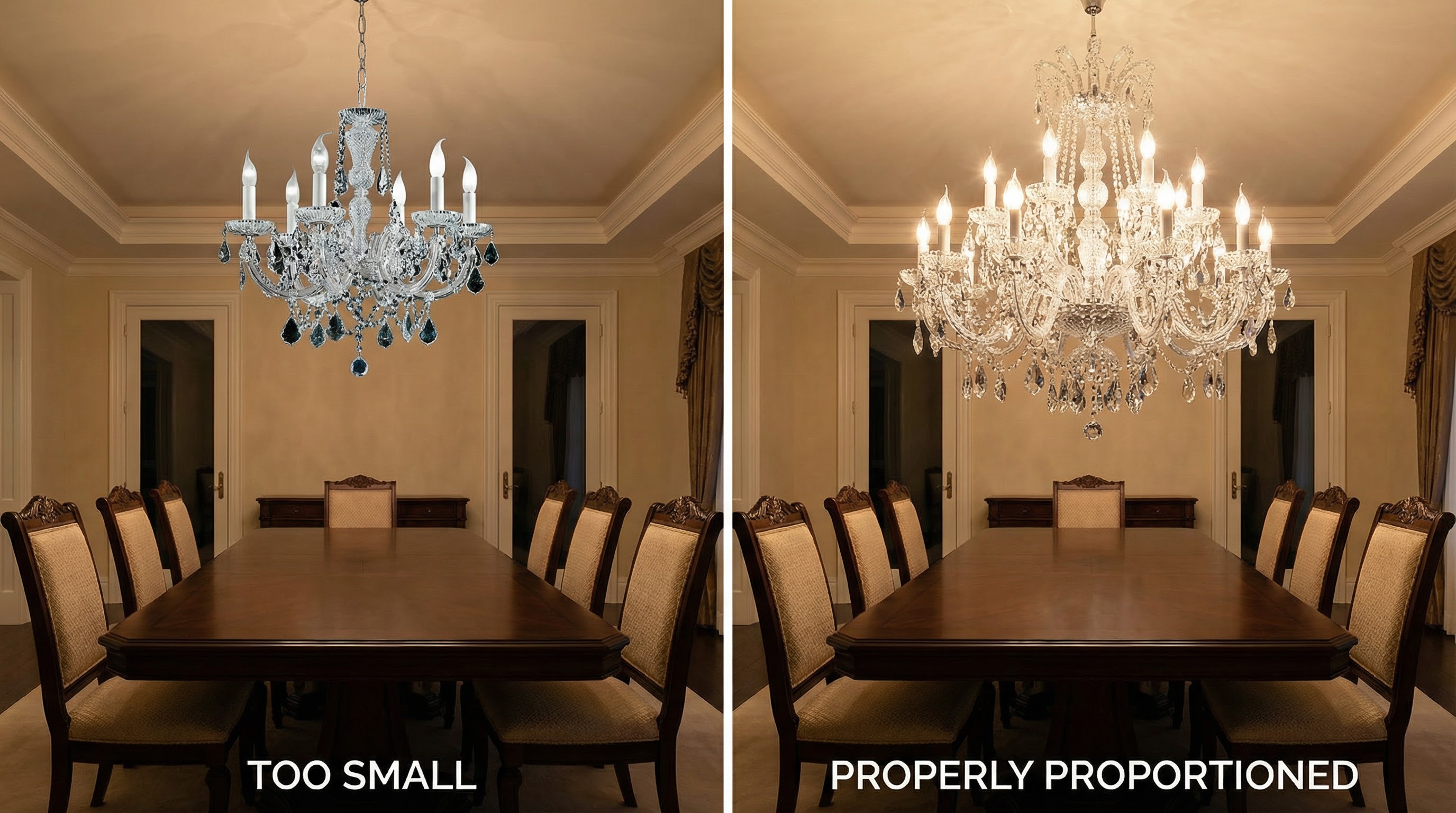
Going too small. This is the most common mistake by far. Homeowners second-guess the formula, worry the chandelier will overwhelm the room, and end up with a fixture that disappears. When in doubt, size up. A chandelier that is slightly larger than the formula suggests almost always looks better than one that is too small.
Ignoring the table shape. Round tables pair best with round or tiered chandeliers. Long rectangular tables call for elongated or linear fixtures — or a pair of round chandeliers. Matching the fixture’s silhouette to the table’s footprint creates visual harmony.
Hanging it too high. In dining rooms especially, a chandelier hung too high loses its intimacy and becomes just another ceiling fixture. Measure from the table surface, not the floor, and keep it within that 30- to 36-inch window.
Forgetting the chain or rod. A chandelier’s listed height includes the body only. You need additional length for the hanging chain, rod, or cord — sometimes 6 to 12 additional inches. Factor this in when calculating whether a fixture will hang at the right height for your ceiling.
Using one fixture for an oversized room. In great rooms, open floor plans, or rooms wider than 20 feet, a single chandelier — no matter how large — can feel lost. Consider a pair of complementary fixtures, or supplement the chandelier with wall sconces to create layers of light.
Frequently Asked Questions
What size chandelier do I need for a 10×12 room?
Add the dimensions: 10 + 12 = 22. That means a chandelier approximately 22 inches in diameter is ideal. You can go up to 24 inches for a room with higher ceilings or dark walls that absorb light. A six-light fixture like the Maria Theresa 6-Light Chandelier in old world gold falls perfectly in this range.
How low should a chandelier hang over a dining table?
The standard is 30 to 36 inches above the table surface. For ceilings higher than 8 feet, add about 3 inches per additional foot of ceiling height. The goal is keeping the chandelier low enough to create intimate, flattering light without blocking sight lines across the table.
Can a chandelier be too big for a room?
Technically yes, but it is far more common to choose one that is too small. A chandelier that exceeds the formula by a few inches can still look intentional and dramatic. Problems arise only when a massive fixture hangs so low it obstructs movement or when its visual weight makes the room feel cluttered. If you are between two sizes, choose the larger one.
What is the difference between a chandelier and a mini-chandelier?
Mini-chandeliers are typically under 20 inches in diameter with 3 to 5 lights, making them suitable for smaller rooms like bedrooms, powder rooms, and walk-in closets. Full-size chandeliers start around 20 inches and can exceed 40 inches, with 6 to 30 or more lights. The design language is the same — crystals, tiered arms, decorative frames — but the scale is tailored to the space.
Should the chandelier match other lighting in the room?
The finish should coordinate, but the design does not need to match exactly. If your chandelier is chrome, keep sconces and recessed trim in the same metallic family. Mixing a chrome chandelier with brass wall sconces creates visual tension unless done very deliberately. Consistent metal tones throughout a room create cohesion even when fixture styles differ.
Finding the Right Chandelier for Your Space
Sizing a chandelier is part math and part intuition. The formulas give you a reliable starting point — room dimensions for diameter, ceiling height for fixture height, table width for dining installations. From there, trust your eye. A well-proportioned chandelier transforms a room from lit to luminous, turning functional overhead light into something that feels designed.
Browse our chandelier collection to explore crystal, traditional, and contemporary styles from Classic Lighting, or start with our mini-chandeliers for more intimate spaces. Every order ships with complimentary delivery, and our concierge team is available to help with sizing questions specific to your room.