
 Mirror
You've narrowed your sofa search to two of the most coveted fabrics in luxury interior design — and now you're stuck. Bouclé promises that cloud-like, textured warmth you've seen in every design magazine this decade.
You’ve narrowed your sofa search to two of the most coveted fabrics in luxury interior design — and now you’re stuck. Bouclé promises that cloud-like, textured warmth you’ve seen in every design magazine this decade. Mohair offers a luminous, silky drape that designers have relied on for over a century. Both are premium, both feel extraordinary, and both will set you back significantly more than a standard performance fabric. So which one actually belongs on your sofa?
The answer depends on how you live. A household with young children and a golden retriever needs a different fabric than a couple who entertains with wine and candlelight. This guide breaks down the real differences between bouclé and mohair upholstery — not the marketing version, but the practical truth about durability, maintenance, cost, and style — so you can invest with confidence.
What Is Bouclé Fabric?
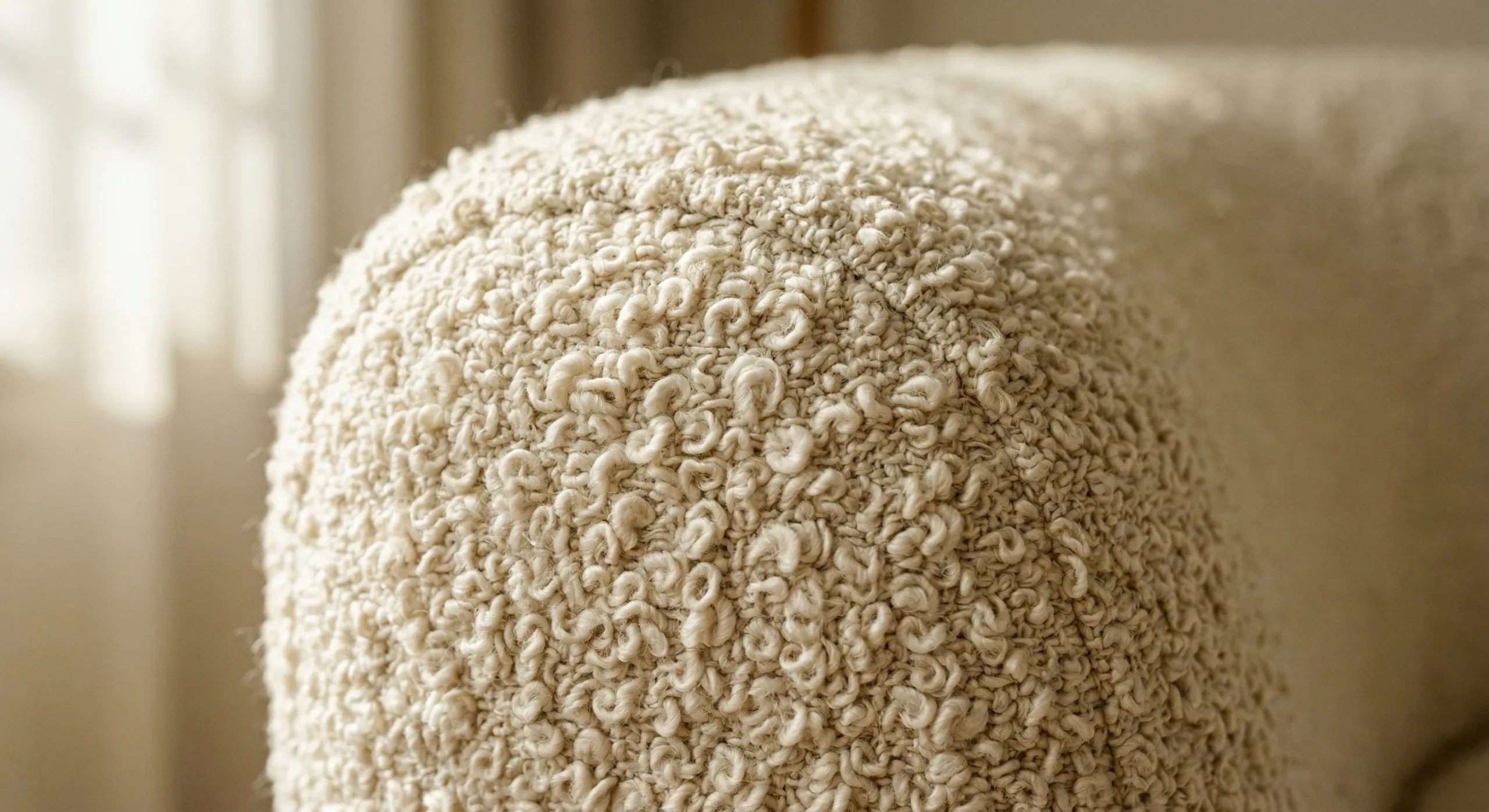
Bouclé takes its name from the French word boucler, meaning “to curl.” The fabric is woven from yarn that has been intentionally looped and twisted, creating a surface of small, irregular curls that give bouclé its signature nubby texture. Run your hand across a bouclé sofa and you’ll feel an almost sheepskin-like softness — plush without being slippery.
The quality of bouclé varies enormously depending on its fiber composition. At the luxury end, bouclé is woven from wool, silk, or cotton blends that produce a dense, resilient surface with natural temperature regulation. Mass-market bouclé relies on polyester or acrylic yarns that mimic the look but lack the hand feel and longevity of natural fibers. When evaluating a bouclé sofa, always ask about the fiber content — it’s the single biggest predictor of how the fabric will age.
Pro tip: Look for bouclé with a rub count (Martindale rating) above 30,000 for sofa upholstery. Anything below 20,000 is better suited to accent pillows or occasional chairs.
Where Bouclé Excels
- Texture and visual warmth — bouclé adds dimension that flat-weave fabrics simply cannot match
- Forgiving surface — the looped texture hides minor stains and wear better than smooth fabrics
- Neutral versatility — cream, ivory, and oatmeal bouclé works in virtually every design style from Scandinavian to mid-century modern
- Year-round comfort — natural-fiber bouclé breathes in summer and insulates in winter
Where Bouclé Falls Short
- Snagging — the exposed loops catch on pet claws, jewelry, and zippers; once snagged, the loop cannot be fully repaired
- Pilling over time — lower-quality bouclé pills within the first year, especially on seat cushions
- Difficult to deep-clean — the looped surface traps crumbs and pet hair between the curls
- Limited color range — most luxury bouclé is produced in neutral tones; jewel tones are rare and expensive
What Is Mohair Fabric?
Mohair comes from the fleece of the Angora goat — not to be confused with angora rabbit fiber, which is an entirely different material. True mohair is one of the most durable natural fibers in existence, with a tensile strength that exceeds wool by a significant margin. It’s also one of the most lustrous, producing a sheen that shifts with light in a way that synthetic velvets can only approximate.
In upholstery, mohair is most commonly used in a velvet weave — mohair velvet — where the cut pile creates a surface that’s simultaneously soft, reflective, and remarkably resilient. This is the fabric you’ll find on museum-quality antiques, in the private libraries of historic estates, and on the designer seating that interior architects specify for clients who want pieces to last decades.
Where Mohair Excels
- Exceptional durability — mohair velvet can withstand 50,000+ rub cycles, making it one of the most hard-wearing natural upholstery fabrics available
- Stain resistance — the smooth, tightly woven pile resists liquid absorption better than most natural fibers
- Color depth — mohair accepts dye more brilliantly than almost any other fiber, producing rich, saturated colors that don’t fade
- Luster — the natural sheen of mohair adds sophistication without the formality of silk
- No pilling — unlike bouclé, mohair velvet does not pill with use
Where Mohair Falls Short
- Price — genuine mohair velvet is among the most expensive upholstery fabrics, typically two to four times the cost of quality bouclé
- Crushing — mohair velvet shows seat marks and pressure lines, though these can be steamed out
- Limited availability — production of genuine mohair has decreased significantly as Angora goat farming has contracted globally
- Formality — mohair’s sheen can read as too formal for casual living spaces
Bouclé vs Mohair: The Complete Comparison
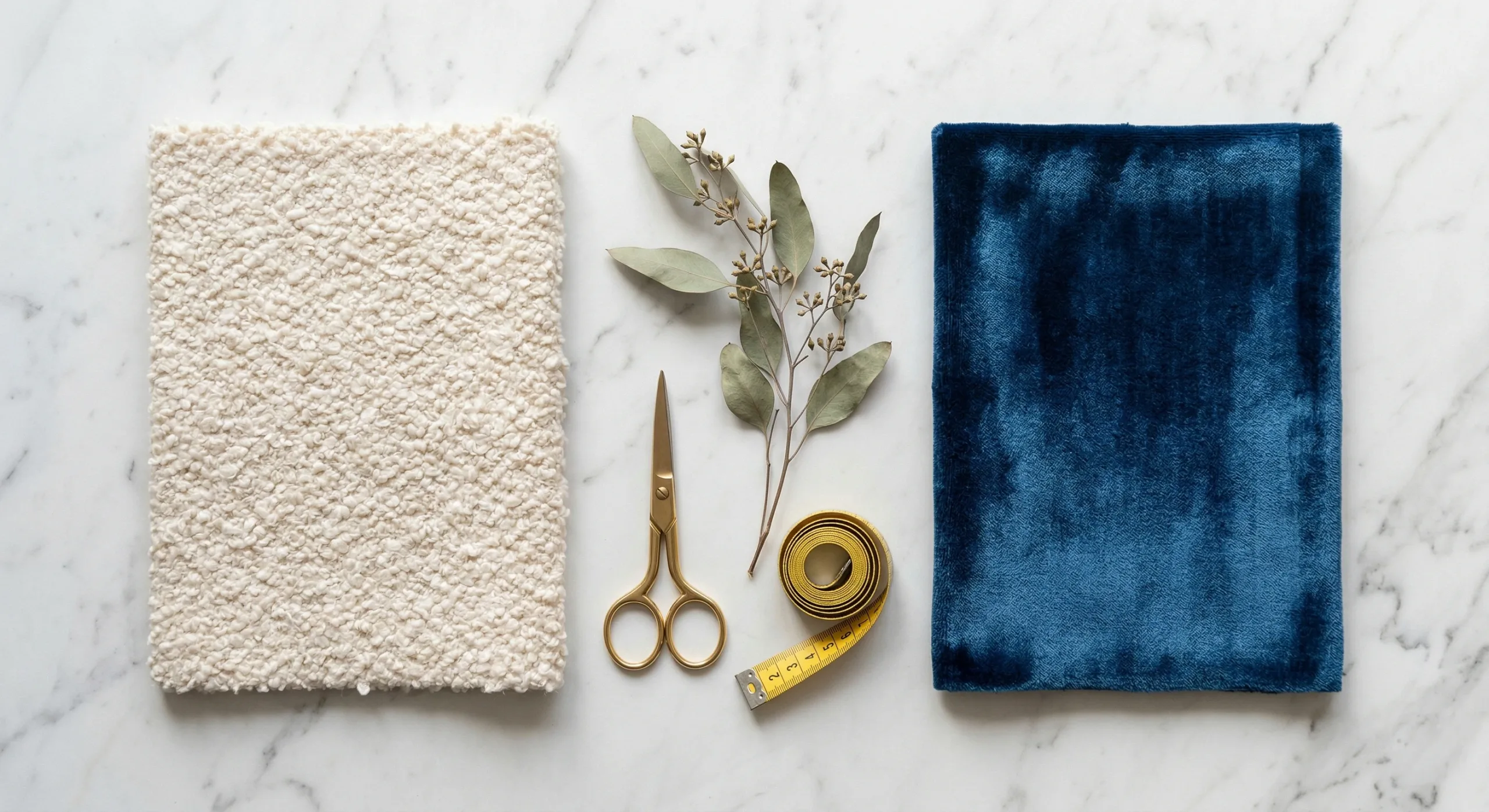
Here’s how these two luxury fabrics stack up across the factors that actually matter when you’re choosing upholstery for a piece you’ll live with for years.
| Feature | Bouclé | Mohair |
|---|---|---|
| Texture | Nubby, looped, tactile | Smooth, velvety, luminous |
| Durability (rub count) | 25,000–50,000 | 50,000–100,000+ |
| Pet friendliness | Poor — loops snag on claws | Good — smooth pile resists damage |
| Stain resistance | Moderate — crumbs hide in loops | Good — smooth surface wipes clean |
| Pilling | Common in lower grades | Virtually none |
| Color options | Mostly neutrals | Full spectrum including jewel tones |
| Price per yard | $50–$150 (quality grade) | $150–$400+ |
| Design style | Modern, Scandinavian, casual luxury | Traditional, Art Deco, formal luxury |
| Maintenance | Professional cleaning recommended | Spot-cleanable; steam for crushing |
| Lifespan | 8–15 years with care | 15–30+ years |
Which Fabric Is Right for Your Living Room?
The right choice isn’t about which fabric is objectively “better” — it’s about matching the fabric to your life. Here’s how to decide.
Choose Bouclé If…
You want a modern, approachable aesthetic. Bouclé reads as warm and inviting without being fussy. It’s the fabric of choice for designers creating Scandinavian-inspired interiors, minimalist living rooms, and spaces where comfort is the priority over formality. A bouclé sofa paired with a velvet accent chair creates the kind of textural contrast that makes a room feel curated rather than catalog-ordered.
Bouclé also works beautifully in bedrooms and low-traffic sitting areas where the fabric won’t face daily abuse. If your sofa is more for Sunday reading than Friday entertaining, bouclé will serve you well.
Choose Mohair If…
You’re investing in a piece that needs to perform for decades. Mohair velvet is the workhorse of luxury fabrics — it looks refined while handling real life. If you have pets, children, or simply use your living room heavily, mohair’s durability and stain resistance make it the smarter long-term investment despite the higher upfront cost.
Mohair is also the right choice when you want rich, saturated color. A deep emerald or sapphire mohair sofa becomes the centerpiece of a room in a way that bouclé’s limited neutral palette cannot achieve. Consider pieces like the Zentique Blue Velvet Louis Arm Chair or the Green Velvet Square Tufted Ottoman to see how rich fabric color transforms a seating piece.
The Cost-Per-Year Calculation
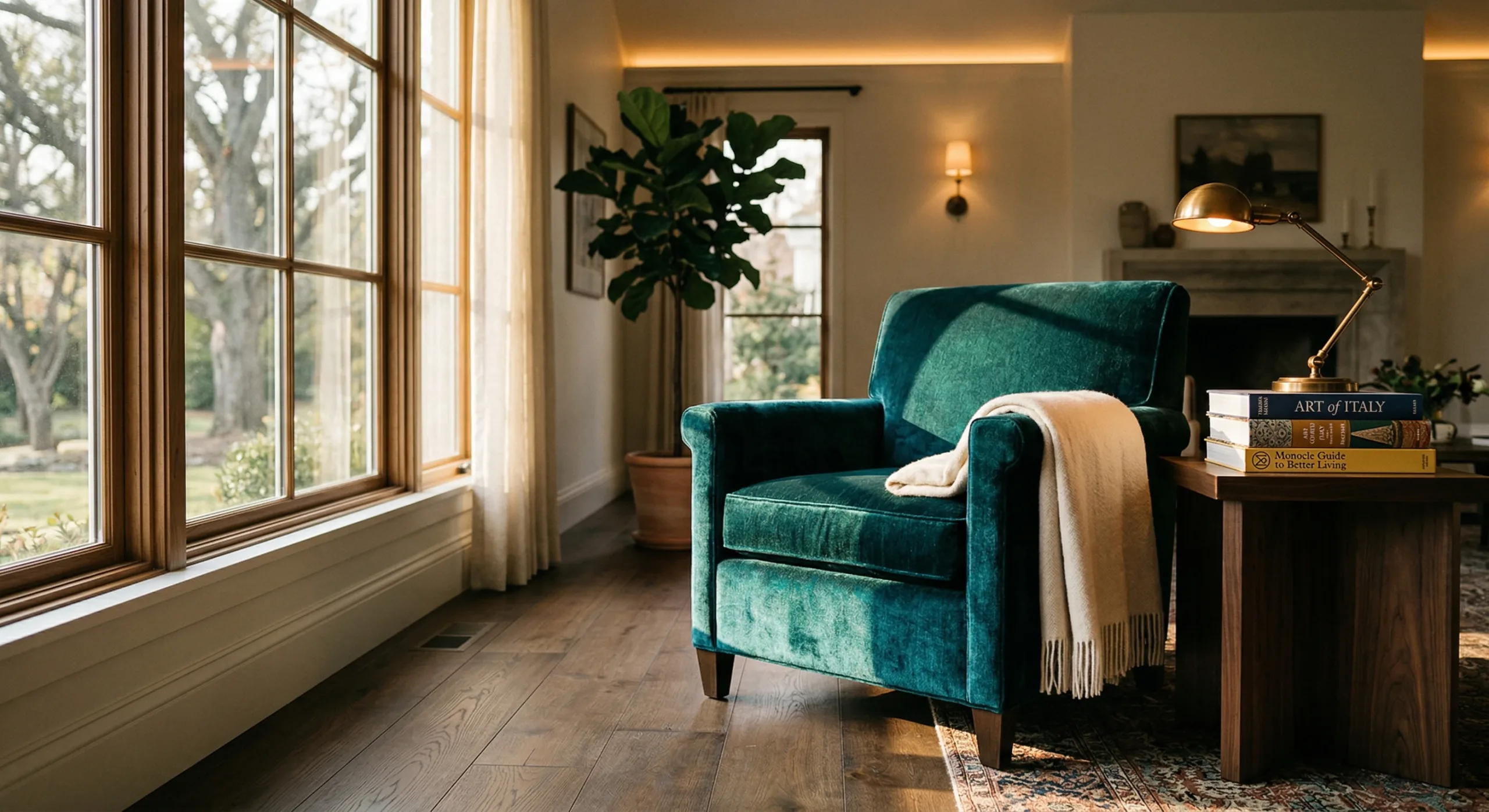
Luxury furniture is an investment, and the most meaningful way to evaluate that investment isn’t the sticker price — it’s the cost per year of enjoyment. This calculation often reverses the intuitive assumption about which fabric is “more expensive.”
Consider a quality sofa upholstered in each fabric:
| Metric | Bouclé Sofa | Mohair Sofa |
|---|---|---|
| Typical price | $3,500–$6,000 | $5,500–$12,000 |
| Expected lifespan | 10–15 years | 20–30 years |
| Cost per year | $233–$600 | $183–$600 |
| Reupholstery needed? | Likely once | Rarely |
When you factor in longevity, mohair frequently costs less per year than bouclé — and that’s before accounting for the reupholstery bill that many bouclé owners face around the 10-year mark. A well-maintained mohair sofa can outlast two generations of bouclé.
Caring for Your Investment
Bouclé Care Essentials
- Vacuum weekly with an upholstery attachment on low suction — the loops trap dust and crumbs
- Rotate cushions monthly to distribute wear evenly across the surface
- Blot spills immediately — never rub, which pushes liquid deeper into the loops
- Professional cleaning annually — bouclé’s texture makes DIY deep cleaning risky
- Keep pets’ claws trimmed — a single snag in bouclé is permanent
Mohair Care Essentials
- Brush gently with a soft clothes brush to maintain the pile direction and remove surface dust
- Steam seat marks — hold a garment steamer six inches from the surface and brush while steaming to lift crushed areas
- Blot spills immediately — mohair’s smooth surface makes most spills easy to address before they set
- Avoid direct sunlight — while mohair is more fade-resistant than many fabrics, prolonged UV exposure will dull the sheen over time
- Professional cleaning every 2-3 years — mohair requires less frequent professional attention than bouclé
Beyond the Sofa: Other Ways to Use These Fabrics
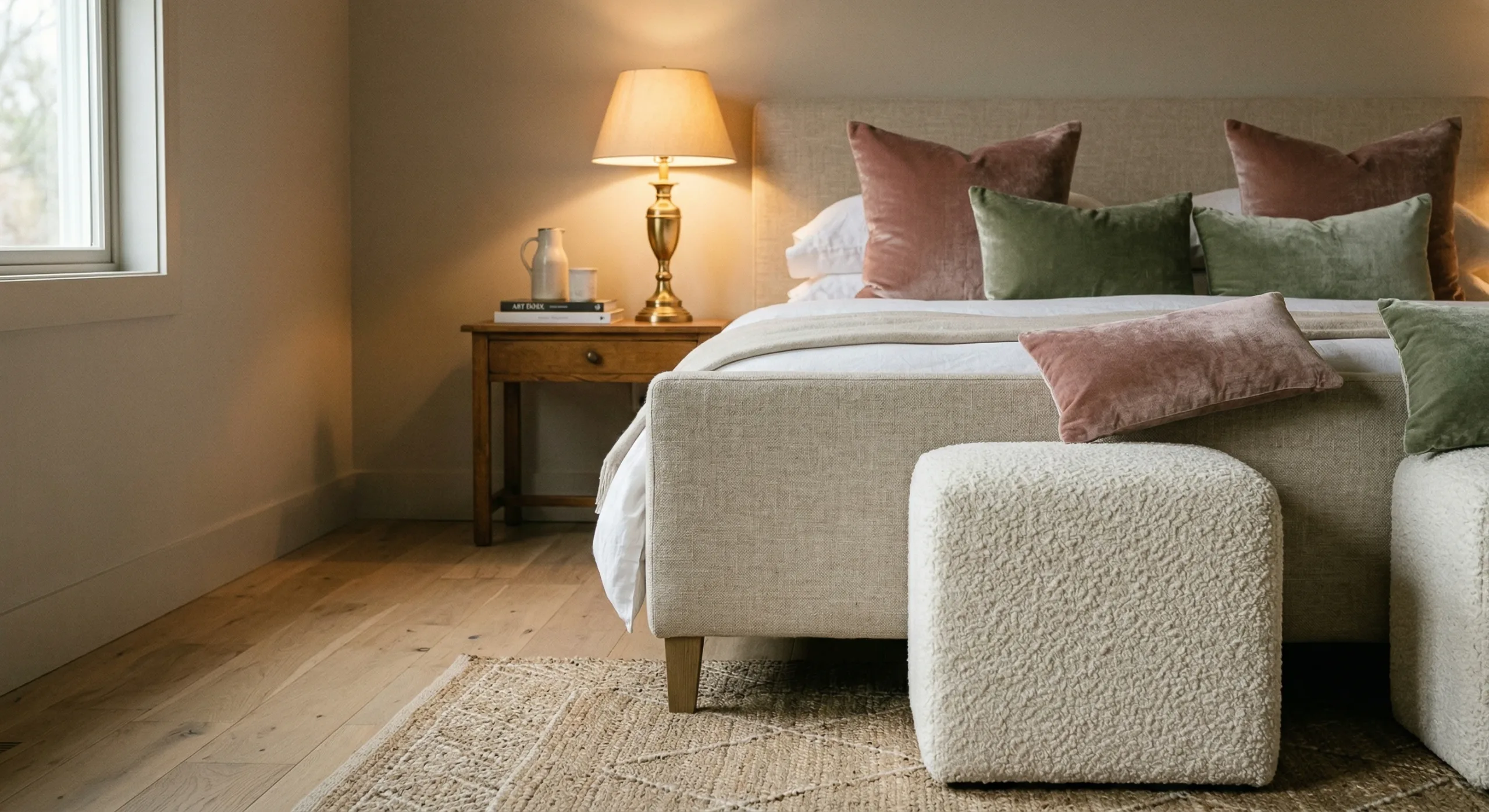
Not ready to commit to a full sofa in either fabric? Both bouclé and mohair work beautifully in smaller applications where you can enjoy their unique qualities with less risk.
Bouclé accent pieces — an ottoman, accent chair, or set of dining chair seats in bouclé adds that coveted texture without the maintenance commitment of a full sofa. The looped texture on a smaller piece becomes a focal point rather than a surface you’re constantly protecting.
Mohair statement pieces — a designer armchair or tufted bench in mohair velvet creates a jewel-box moment in a bedroom, reading nook, or entryway. The fabric’s natural luster catches light beautifully in intimate spaces. Explore our seating collection for pieces that showcase how fabric choice elevates furniture from functional to exceptional.
For spaces where you want the warmth of luxury textiles without the upholstery commitment, consider pairing either fabric as throw pillows against a more durable base. A set of mohair pillows on a linen Chesterfield sofa gives you the color and luster of mohair with the easygoing durability of linen underneath.
Frequently Asked Questions
Is bouclé or mohair better for homes with pets?
Mohair is significantly better for pet owners. Its smooth velvet surface resists claw damage and doesn’t trap pet hair the way bouclé’s loops do. If you love the look of bouclé but have cats or dogs, consider a bouclé accent pillow instead and use mohair or a performance fabric for your main seating.
Can I mix bouclé and mohair in the same room?
Absolutely — and designers frequently do. The contrast between bouclé’s matte, textured surface and mohair’s luminous sheen creates visual depth. A common approach is a bouclé sofa with mohair accent chairs, or vice versa. Keep the color palette cohesive and the textural contrast does the rest.
How can I tell if bouclé or mohair is genuine quality?
For bouclé, check the fiber content (natural fibers like wool and cotton indicate quality) and the Martindale rub count (30,000+ for furniture). For mohair, verify it’s genuine Angora goat fiber — many “mohair-look” fabrics are actually acrylic. Genuine mohair has a distinctive luster that synthetics can’t replicate and feels cool to the touch rather than warm like polyester.
Does bouclé go out of style?
Bouclé has cycled in and out of fashion since the 1930s, with its current wave of popularity starting around 2019. However, bouclé in neutral tones on classic silhouettes — think a cream bouclé sofa with clean lines — transcends trends. What dates quickly is bouclé in trend-driven shapes or colors. Stick to timeless forms and you’ll be fine for decades.
Is mohair velvet worth the premium over regular velvet?
If longevity matters to you, yes. Mohair velvet outlasts cotton and polyester velvet by a wide margin, resists crushing better, and maintains its color depth far longer. The premium is typically two to three times the price, but a mohair piece will look pristine after 20 years of use — the same can’t be said for most synthetic velvets.
What’s the most durable luxury upholstery fabric overall?
Mohair velvet and high-grade leather are the two most durable luxury options. For a fabric comparison, mohair velvet (50,000-100,000+ rub cycles) outperforms bouclé (25,000-50,000), linen (15,000-30,000), and cotton velvet (15,000-25,000). Only commercial-grade woven fabrics exceed mohair’s durability numbers.
Both bouclé and mohair represent the upper echelon of upholstery fabrics — choosing between them is less about quality and more about how you want your space to feel. Bouclé brings warmth, texture, and approachable luxury. Mohair brings luminosity, endurance, and quiet sophistication. The best rooms often feature both.
Browse our seating collection to explore designer furniture that showcases the transformative power of exceptional fabric, or browse all furniture to find the perfect piece for your space.