
 Mirror
You're standing in a lighting showroom — or more likely, scrolling through product pages — and you keep seeing "brass" and "gold" used almost interchangeably. One chandelier is labeled "antique brass," another "old world gold," and a third "brushed gold" that looks suspiciously like brass.
You’re standing in a lighting showroom — or more likely, scrolling through product pages — and you keep seeing “brass” and “gold” used almost interchangeably. One chandelier is labeled “antique brass,” another “old world gold,” and a third “brushed gold” that looks suspiciously like brass. Are brass and gold lighting fixtures actually different, or is it just marketing?
The short answer: they’re different materials with different visual properties, different aging characteristics, and different price points. But the long answer is more useful — because once you understand how brass and gold finishes behave in real lighting conditions, you’ll make a more confident choice for your space. This guide covers the actual material science, the visual differences that matter at home, and how to mix metallic finishes without creating chaos.
Brass vs Gold: The Material Difference
Brass is an alloy of copper and zinc. It’s a structural metal — the fixture itself is often made from solid brass or brass-plated steel. When you see “brass” in a lighting fixture description, you’re usually looking at the actual material the fixture is constructed from, finished to highlight its natural warm tone.
Gold, in lighting terms, almost never means solid gold. Instead, “gold” refers to a decorative finish — a thin coating applied over a base metal (typically brass, steel, or aluminum) to achieve the bright, warm reflectivity associated with gold. Common gold finish names include “old world gold,” “French gold,” “burnished gold,” and “champagne gold.” Each produces a slightly different hue, but all aim for that distinctly luminous, yellow-warm quality that pure gold possesses.
Pro tip: When reading product descriptions, “brass” tells you about the material or its color family. “Gold” tells you about the finish treatment. A fixture can be both — solid brass with a gold finish — which is actually the most durable combination available.
How They Look in Your Home
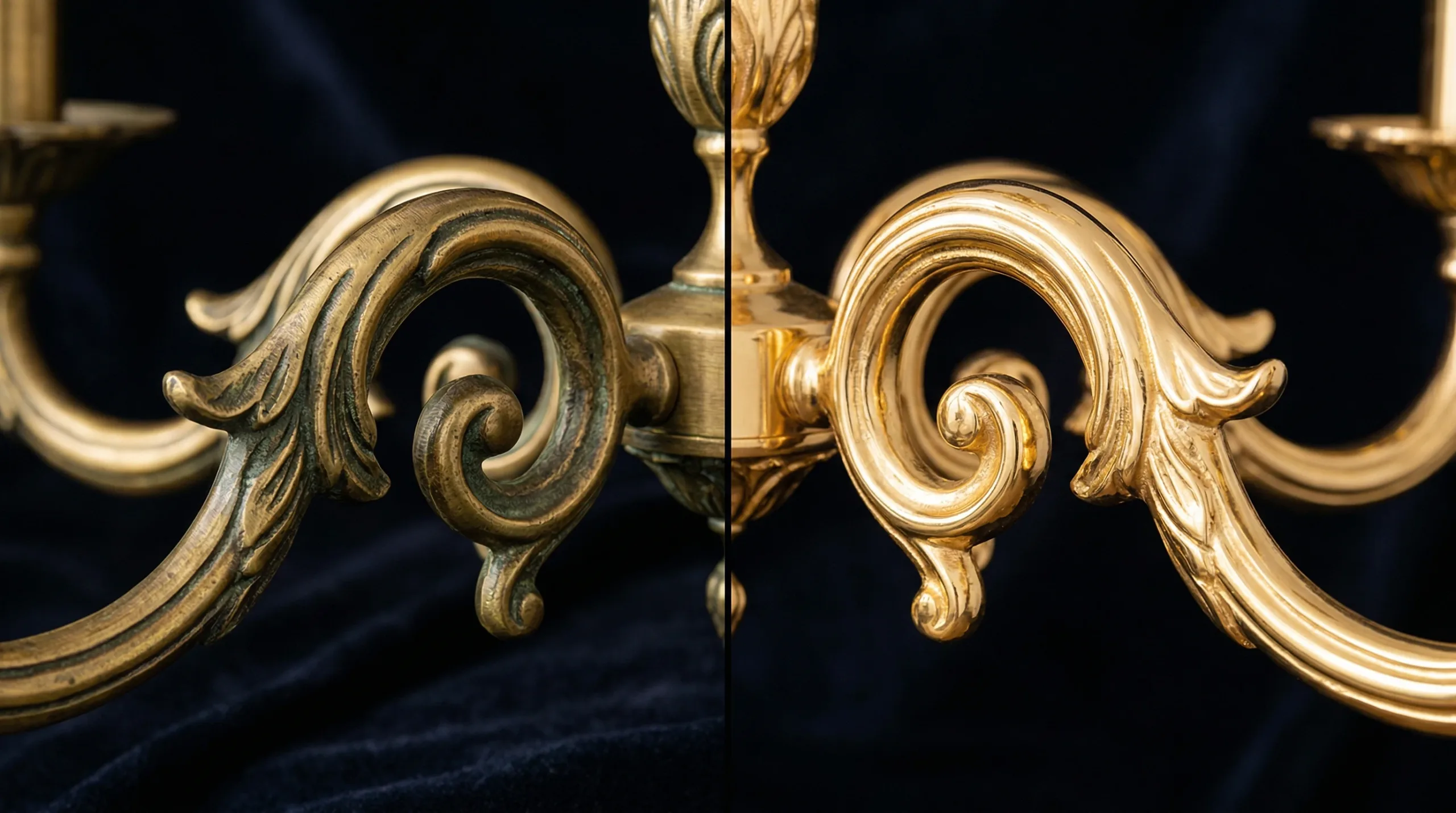
On a screen, brass and gold can look nearly identical. In a real room with real light, the differences become clear.
Brass Finishes
Brass reads warmer and more muted. It has an earthy, slightly greenish-gold undertone that feels grounded and organic. Antique brass takes this further with an intentionally darkened patina that emphasizes depth and shadow in the fixture’s details — you can see this beautifully in pieces like the Versailles 9-Light Chandelier in Antique Brass, where the patina accentuates every crystal drip and arm curve.
Common brass finish variations you’ll encounter:
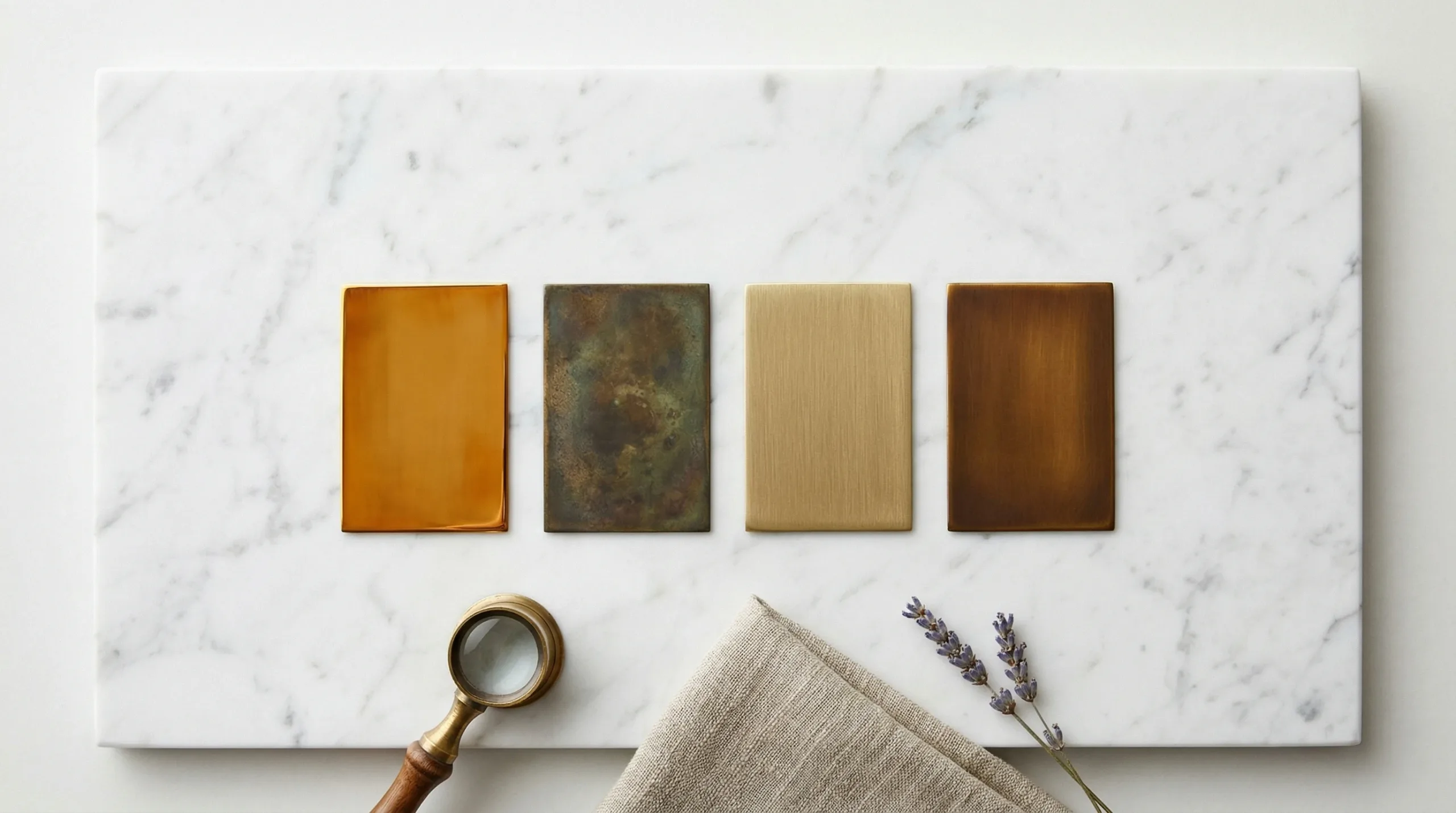
- Polished brass — bright and reflective, closest to gold in appearance but with a slightly deeper, more amber tone
- Antique brass (AB) — darkened and aged, with visible patina in the recesses. Classic, traditional feel
- Brushed brass — soft, directional texture with a matte quality. Contemporary and understated
- Aged bronze (ABZ) — darker than antique brass, with brown-bronze undertones. Pairs well with rustic and Mediterranean interiors
Gold Finishes
Gold reads brighter and more luminous. It reflects more light, catches the eye more readily, and carries a distinctly polished, jewel-like quality. A gold-finished chandelier in a dining room acts as a focal point in a way that a brass one doesn’t — gold demands attention, while brass integrates. The Maria Theresa 13-Light Chandelier in Old World Gold demonstrates this perfectly — the gold finish amplifies the crystal’s sparkle rather than grounding it.
Common gold finish variations:
- Old world gold (OWG) — rich, warm gold with subtle antiquing. Opulent without being garish
- French gold — lighter, more delicate gold with silvery undertones. Elegant and refined
- Brushed gold — muted gold with directional texture. Modern take on a classic finish, as seen in the Brushed Gold Chandelier
- Champagne gold — soft, pinkish-gold with a subtle warmth. The most neutral gold option
The Complete Comparison
| Feature | Brass Fixtures | Gold Fixtures |
|---|---|---|
| Base tone | Warm amber with greenish undertone | Bright yellow-warm with high reflectivity |
| Light reflection | Moderate — absorbs some light, creates depth | High — bounces light, amplifies brightness |
| Aging behavior | Develops natural patina over years (can be desirable) | Finish may dull or wear if not lacquered |
| Maintenance | Minimal — patina is part of the appeal | Occasional dusting; avoid abrasive cleaners |
| Design mood | Grounded, organic, approachable luxury | Elevated, luminous, statement-making |
| Best rooms | Kitchens, bathrooms, studies, casual living areas | Dining rooms, entryways, formal living rooms |
| Pairs with | Wood, leather, linen, matte black, concrete | Crystal, marble, velvet, lacquer, mirror |
| Price range | Mid to high (solid brass costs more but lasts longer) | Varies (gold plating on steel is often less expensive than solid brass) |
Choosing the Right Finish for Each Room
Dining Room
Gold wins here. The dining room is where lighting is most on display — hanging directly over the table at eye level during meals. Gold finishes amplify candlelight and crystal, creating the warm glow that makes eveningdining feel special. Browse our chandelier collection to see how gold-finished fixtures transform a dining space.
Kitchen
Brass is the better choice. Kitchens need fixtures that can handle humidity, grease, and frequent cleaning. Solid brass withstands all of this and develops character rather than damage over time. Brushed and antique brass finishes also hide fingerprints and water spots better than high-gloss gold. Explore our pendant lighting for brass options that work beautifully over kitchen islands.
Bathroom
For vanity lighting, both work — but consider the overall hardware. If your faucet and towel bars are brushed brass, match your vanity lights to brass. The key rule: your lighting finish should be within the same metallic family as your hardware, even if they don’t match exactly.
Entryway and Foyer
This is your home’s first impression. Gold finishes make a stronger statement in an entryway — they catch natural light from the front door and create an immediate sense of luxury. A gold chandelier or lantern pendant in the foyer sets the tone for the entire home.
Can You Mix Brass and Gold?
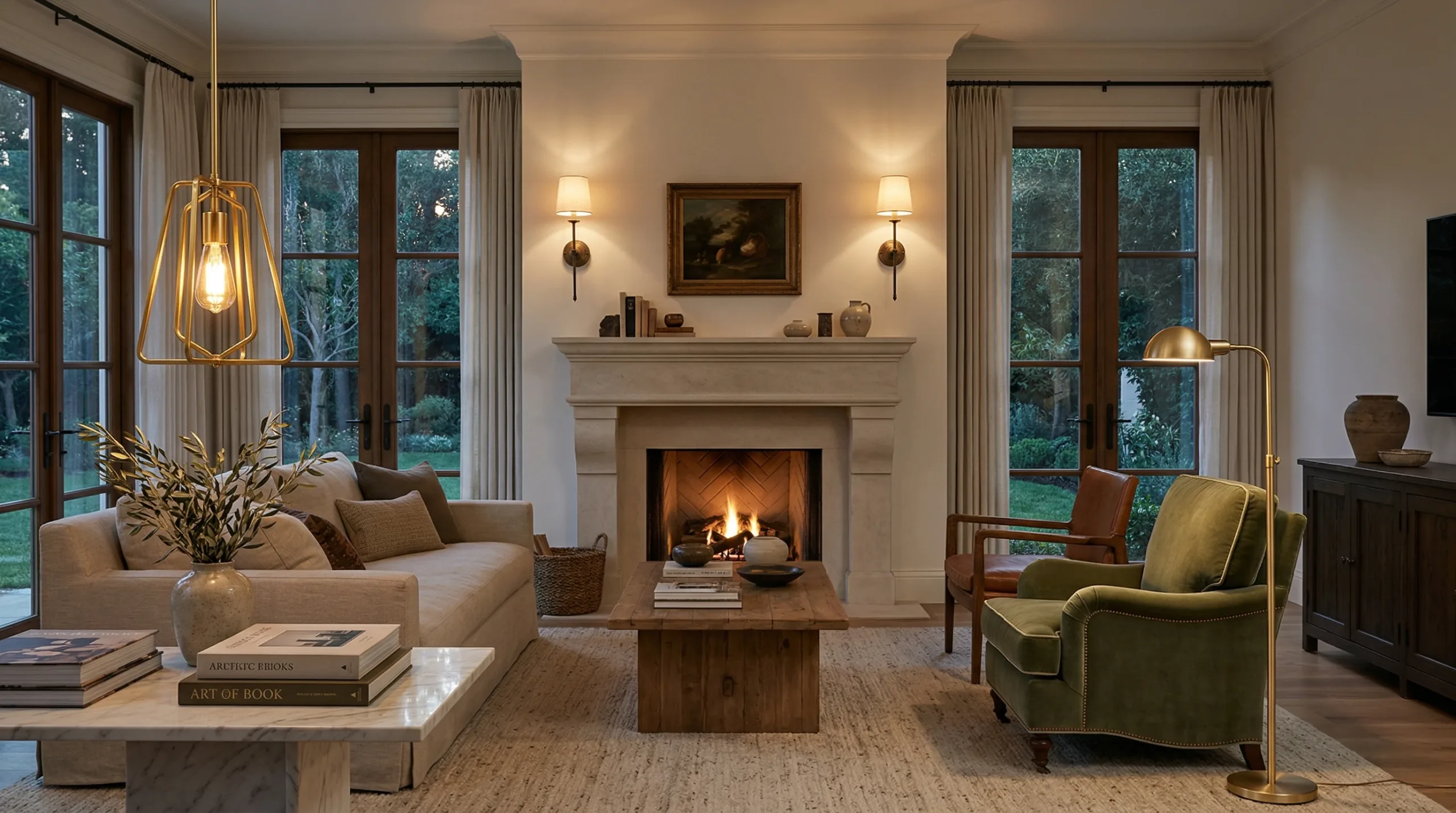
Yes — and designers do it constantly. The trick is understanding that brass and gold are part of the same warm metallic family, so they naturally coordinate rather than clash. What you want to avoid is mixing warm metals (brass, gold) with cool metals (chrome, polished nickel) in the same sightline.
Practical mixing guidelines:
- Same room, different functions: Gold chandelier with brass cabinet hardware works beautifully — the eye reads them as coordinated warm tones, not mismatched
- Adjacent rooms: Brass sconces in a hallway flowing into a dining room with a gold chandelier creates a natural transition from casual to formal
- The 70/30 rule: Pick one as your dominant metallic (70% of fixtures) and use the other as an accent (30%). This creates intentional variety rather than accidental mismatch
- Anchor with a third material: When mixing brass and gold, add a matte black element (a lamp base, picture frames, door handles) to bridge the two warm tones
Pro tip: If you’re unsure whether your brass and gold selections will coordinate, order samples or swatches and hold them together in the room’s actual lighting. Artificial showroom light and natural daylight can shift how these finishes read dramatically.
Caring for Brass and Gold Fixtures
Brass Care
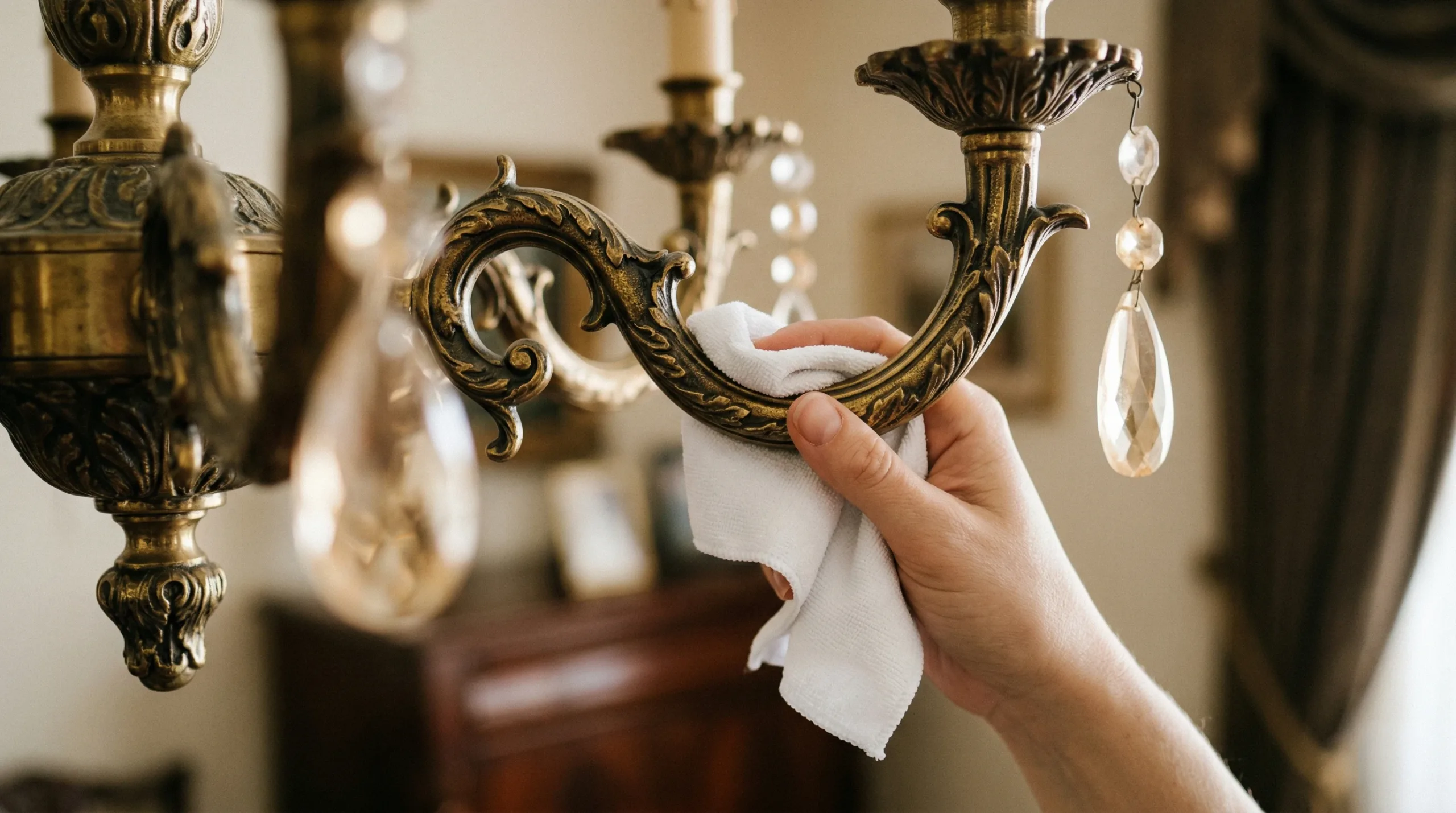
Most brass lighting fixtures come with a clear lacquer coating that prevents tarnishing. As long as this coating is intact, care is minimal — dust with a soft cloth and avoid abrasive cleaners. If you have unlacquered brass (increasingly popular for its living finish), expect it to patina naturally. This is a feature, not a flaw.
To clean lacquered brass: soft damp cloth, then dry immediately. To polish unlacquered brass: a mixture of equal parts vinegar and salt, applied with a soft cloth, then rinsed and dried.
Gold Finish Care
Gold finishes are more delicate than solid brass because you’re protecting a surface treatment, not the base metal. Never use brass polish on a gold-finished fixture — it will strip the finish. Stick to a dry microfiber cloth for regular dusting and a slightly damp cloth for spot cleaning. Avoid any product containing ammonia or acetone.
Frequently Asked Questions
Is brass cheaper than gold-finish lighting?
Not necessarily. Solid brass fixtures are often more expensive than gold-plated steel because brass itself is a premium material. However, brass-plated fixtures (a thin brass coating over steel) can be less expensive than either. The key is checking whether the fixture is “solid brass,” “brass-plated,” or “brass-finished” — each represents a different quality tier and price point.
Will brass lighting fixtures tarnish?
Lacquered brass will not tarnish under normal conditions. Unlacquered (or “living”) brass will develop a patina over time — this is intentional and considered desirable in most design contexts. If you prefer the bright-brass look permanently, choose lacquered finishes or commit to periodic polishing.
Can I use brass lighting with chrome faucets?
You can, but it requires intention. The current design consensus allows mixing metal temperatures as long as there’s a clear visual logic — for example, all plumbing fixtures in chrome and all lighting in brass. What looks messy is random mixing without a pattern. In a kitchen, brass pendants above the island with chrome faucet and sink hardware is a well-established combination.
What’s the difference between “antique brass” and “aged bronze”?
Antique brass has a warm, golden base with darkened recesses, retaining visible yellow-gold character. Aged bronze is darker overall with more brown-copper undertones and less visible gold. In practice, aged bronze reads as a “dark warm metal” while antique brass reads as “darkened gold.” Both pair well with traditional and transitional interiors.
Which finish is more timeless — brass or gold?
Both have centuries of precedent in interior design. Brass has the edge in versatility — it works in traditional, mid-century, industrial, and contemporary spaces. Gold finishes lean more formal and opulent, which makes them slightly more sensitive to shifting trends. If longevity is your priority, brushed or antique brass is the safest choice. If impact is your priority, gold delivers more drama per fixture.
Whether you gravitate toward the grounded warmth of brass or the luminous polish of gold, both finishes bring an undeniable sophistication to any room. The best choice depends on your space, your style, and how much maintenance you’re willing to embrace. Browse our chandeliers, pendants, and sconces to see both finishes in action — and don’t hesitate to reach out to our concierge team if you need help matching finishes across a room.